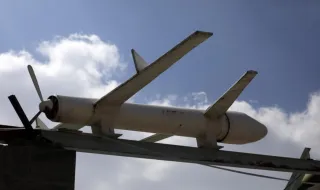
The UK is reporting a sharp increase in drone incidents around military sites, which increases concerns about the security of the country's strategic infrastructure.
In the 12 months to August 2026, 340 incidents with unmanned aerial vehicles over or near British military sites were recorded, The Independent reports, quoted by Der Spiegel.
For comparison, in 2024, British authorities reported 126 similar incidents. In 2025, the Ministry of Defence recorded 266 reports, meaning the trend continues this year.
New data shows that on average, a drone incident is recorded near a British defence facility almost every day.
Not every such incident means espionage or a hostile operation. Some of the drones may be operated by civilian operators, and British authorities have not publicly identified the origin and purpose of all registered devices.
However, the sharp increase worries security services because of the possibility that drones can be used for reconnaissance, surveillance or attacks against sensitive infrastructure.
The military is getting more powers
London is already taking additional measures.
The British Ministry of Defense announced in February that military personnel would receive expanded powers to counter and neutralize drones that pose a threat to military facilities.
Until now, some of these actions required the intervention of the police or other authorized structures.
The new rules should allow authorized military personnel to react immediately when they detect threat.
The government has quadrupled spending on counter-drone technology, with more than £200 million allocated this year.
Airspace restrictions have been introduced at around 40 military sites, and bases are receiving new drone surveillance and detection systems.
New systems are already monitoring the skies
Just a few days ago, the British Ministry of Defense announced the implementation of a new passive drone detection system at the Warminster military base.
In the first 17 days of real monitoring, the system registered 29 signals for drone positions at a distance of up to 5 km. After verification, none of them were identified as a threat.
The technology combines radio frequency and optical sensors and allows the detection, tracking and identification of flying objects around the base.
The British Ministry of Defense is considering the possibility of deploying similar systems at other military sites.