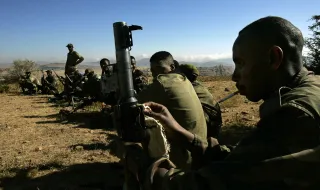
Rebel forces from the Tigray People's Liberation Front (TPLF) have taken control of the airport in Mekelle - the capital of the eponymous Tigray state in northern Ethiopia - amid growing tensions with the federal government, local government officials and security officials said, quoted by Agence France-Presse. The airport was seized three days after seven groups opposing the federal government, including the TPLF, the Amharic militias “Fano” and the Oromo Liberation Army, announced they were forming a coalition to overthrow the government of Prime Minister Abiy Ahmed in Addis Ababa.
Around 600,000 people died between 2020 and 2022 during the previous devastating war between Ethiopian federal forces and the FONT, which ended with a ceasefire signed in Pretoria. Both sides now accuse each other of provoking a return to open conflict.
“We are now in a situation of full-scale war“, FONT vice-chairman Emmanuel Assefa told AFP. He confirmed that the Tigray forces are fighting alongside local armed groups in Afar and Amhara states. On Wednesday, the group took control of the town of Abala, located on the border between Tigray and Afar, a foreign security source based in Ethiopia said, while a FONT source said they had captured several other towns in Afar. The foreign source also said that fighting was taking place around the town of Weldiya in Amhara - one of the direct routes to the capital, Addis Ababa. In its first public comments on the fighting, the Ethiopian army said it had repelled the attacks and killed, wounded or captured more than 500 enemy fighters.
The coalition of groups emerged as a result of the political realignment following the Pretoria agreement that ended the two-year war in Tigray in November 2022, Qatari television channel “Al Jazeera“ recalls. While the deal brought peace between Addis Ababa and the FONT, it has also divided the coalition that the newly appointed Prime Minister Abiy had formed to fight the war. Neither Eritrea nor the Amhara forces - whose troops fought alongside the federal army - were parties to the final agreement, and both sides' relations with the federal government have since soured. The Pretoria agreement has also deepened internal divisions within the FONT.
Analysts say the FONT enjoys the support of neighboring Eritrea - a historical enemy of Ethiopia, which fears that landlocked Ethiopia is planning to invade its territory to gain access to the Red Sea. Assefa denied this to AFP: "We have no information about Eritrea's plans". Asked if they would seek Eritrea's intervention, he said: "Not yet."
In his address to the UN General Assembly on Wednesday, Ethiopian President Taizé Atsakeh-Selassie Amde condemned "the forces of destruction and chaos" and "interference in our internal affairs by hostile elements." He said Ethiopia had shown "tremendous restraint" and was in contact with its neighbours.
The renewed fighting poses the most serious challenge yet to the 2022 Pretoria agreement that ended the civil war and maintained a fragile peace until late last year, when clashes resumed, the BBC reported. The Chairperson of the African Union, Mahmoud Ali Yusuf, called on the warring parties to exercise "maximum restraint" and resume direct negotiations. An AU spokesman called for "immediate de-escalation" and reaffirmation of commitment to the Pretoria agreement. The British agency recalls that during the 2020-2022 war, Tigray was largely cut off from the outside world, as communications were cut off and access to food, cash and medicine was severely limited, and warned that hundreds of thousands of civilians are now threatened with starvation.
According to the "New York Times", the events of this week suggest the possible beginning of a new, full-scale war, but it remains unclear how the federal government in Addis Ababa will respond. One of the open questions is what role Eritrea and its leader Isaias Afwerki would play in any military action. The US Ambassador to Ethiopia, Irwin Masinga, was quoted by the newspaper as saying that Washington had imposed sanctions on the leadership of the FONT earlier this year. At the same time, he criticized Tigre's "unwise decision" to launch a large-scale offensive, adding that dialogue was still possible.
The Prime Minister's foreign policy advisor Getachew Reda accused Eritrea and Egypt of coordinating with domestic armed groups to wage a proxy war against the Ethiopian federal government, Ethiopian media outlet Borkena reported. According to him, Asmara, supported by Cairo, is actively exploiting regional tensions to destabilize Ethiopia and impose its military influence in the Horn of Africa region. Getachew stressed that the Eritrean government is deliberately avoiding direct military action, instead using local rebel groups as its operational tools. Reda dismissed the possibility of the coalition overthrowing the government: "This does not disturb my sleep." "Now the FONT is starting all over again, declaring the Pretoria agreement dead and entering into an alliance with the very people who quarreled with the federal government over the signing of the Pretoria agreement," he added.
The national Ethiopian News Agency (ENA) has a similar tone, directly declaring the rebel coalition a "Trojan Horse Axis" of "anti-Ethiopian forces." The FONT is accused of being on the verge of unleashing another wave of destruction. "The people of Tigray, like all Ethiopians, deserve a future built on development and dignity. Those who continue to gamble on this future must be told clearly: “Enough!“, the article concludes.
Neighboring countries have been accused of supporting the rebels, “Euronews“ notes. In June, Ethiopian Foreign Minister Gedeon Timoteos said that radicals in the FONT leadership were “actively stockpiling and acquiring new weapons“, violating the Pretoria Agreement. According to an assessment published earlier this year by the monitoring group ACLED, Eritrean authorities are supplying forces in Tigray with weapons and also sheltering separatists on their territory. In May, Ethiopian authorities officially accused the Sudanese armed forces of providing “weapons and financial support“ to forces affiliated with FONT, calling Sudan “a center of anti-Ethiopian forces“. Khartoum denied these accusations. Egypt, which has long been in a dispute with Ethiopia over the construction of the Grand Ethiopian Renaissance Dam on the Nile, has been providing diplomatic cover and logistical support to Ethiopian opposition groups, although the channel said there were no documented direct arms supplies to the FONT from Egypt.
Edward Bach, senior Africa analyst at risk assessment firm Verisk Maplecroft, told the Financial Times that the FONT offensive had increased the likelihood of a full-scale conflict and provided an excuse for Abiy's government to step up drone attacks. He said the federal government was in a stronger position than it had been during the 2020 fighting, having amassed a "significant stockpile of imported and domestically produced drones that played a key role in turning the tide of the previous war." However, he noted that if the conflict were to resume, federal forces would likely be forced to operate on multiple fronts against a newly formed alliance of rebel groups. The conflict also has "serious potential for regional expansion." The offensive ends a peace agreement that ended the 2020-2022 conflict between the FONT and federal forces, Reuters noted. The conflict is raging against a backdrop of deteriorating relations between Ethiopia and Eritrea, the civil war in Sudan, tensions over access to the Red Sea and the Horn of Africa’s involvement in conflicts in the Middle East. As the situation unfolds, all eyes will be on Asmara, which has had a rocky relationship with Addis Ababa since it declared independence in 1993. Asmara fears that Addis Ababa could try to seize its Red Sea port of Assab by force, which would partially restore its access to the sea. Diplomats warn that a new war in Tigray would no longer be an isolated Ethiopian conflict. Instead, it would come at a time when the Horn of Africa is facing its most volatile security situation in years – against the backdrop of the war in Sudan, the ongoing instability in Somalia, the tension around the Nile River, and the growing conflicts and geopolitical processes in the Middle East that also affect this region.
The Ethiopian newspaper “Addis Standard“ notes that while world attention is drawn to the war in Iran and the intensification of the fronts in the Middle East, the Horn of Africa is gradually being drawn into the same strategic theater. Thus, the Red Sea can no longer be divided into two regions, into two coasts - they are now linked by their wars. Local wars attract external sponsors. External rivalries deepen local divisions. New military technologies allow armed players to strike far beyond the territory they control. The conflict is becoming a way of organizing politics.
“The Pretoria Agreement ended the main fighting, but did not resolve the main disputes. Ethiopia's search for reliable access to the sea has intertwined with wider regional alliances. The war with Iran has increased the value of coastlines, ports, islands and airports. "Each new war would be more fragmented and internationalized than the last. Drones, proxies, and external sponsors would accelerate escalation. Even victory would leave devastated borderlands, deeper divisions, and greater external dependence, destroying the political order on both sides of the front line," notes the author of the article, Abdul Mohamed, a senior political advisor to the African Union and a specialist in the region.