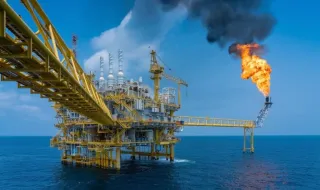
Brent crude prices rose more than 3 percent on Monday after US President Donald Trump rejected Iran's peace offer to end the conflict between the two countries and resume traffic through the Strait of Hormuz, which has kept tensions in the Middle East high, Reuters reported, citing BTA.
Brent futures, the benchmark for Europe, rose $3.43, or 3.29 percent, to $107.75 a barrel.
U.S. light crude prices rose more than 3 percent on Tuesday, Reuters reported, citing BTA.
Brent futures, the benchmark for Europe, rose $3.43, or 3.29 percent, to $107.75 a barrel.
U.S. light crude prices rose more than 3 percent on Tuesday, Reuters reported. rose $2.14, or 2.32 percent, to $94.55 a barrel.
Iran presented a peace proposal to the United Nations General Assembly in New York last week that Tehran said was conveyed to the United States through Qatari intermediaries. Trump said Saturday that he had rejected the proposal, but in a telephone interview with Axios on Sunday he expected U.S. negotiators to hold new talks with Iran this week.
“The rejection has dampened hopes for an immediate breakthrough, even though diplomatic efforts are not over,“ said Sugandha Sachdeva, founder of New Delhi-based research firm SS WealthStreet“ (SS WealthStreet).
Brent rose 0.4 percent last week, while U.S. crude fell 7.9 percent on concerns that the United States could ban diesel exports to curb record-high prices, which could cut output at U.S. refineries.
“Refined oil products remain a problem area, with record U.S. diesel prices raising inflation risks and reviving debate over possible export curbs,“ analysts at “ANZ“ said in a note. They said any restrictions on U.S. diesel exports would tighten supply outside the country, with European prices reacting to the prospect of reduced U.S. supplies.
Meanwhile, crude oil exports from key Middle Eastern producers rebounded in September to 12.8 million barrels per day (bpd) - the highest since the war began in February, preliminary data from Kpler showed. The increase was driven by higher exports from Saudi Arabia and the United Arab Emirates.
The data showed that supplies through the Strait of Hormuz had recovered and were expected to reach about 7.4 million bpd this month. Saudi Arabia has redirected exports from the Red Sea port of Yanbu to the eastern port of Ras Tanura after attacks damaged the East-West pipeline.