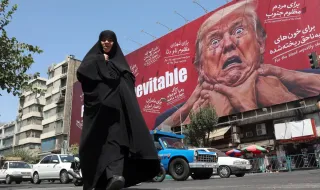
Iranian officials have expressed pessimism that Tehran and Washington will reach an agreement to end hostilities and open the Strait of Hormuz before the November midterm elections in the US. According to Bloomberg, Iran believes that there is a high probability that the conflict will escalate after the November 3 vote.
The agency's sources familiar with the talks claim that the negotiations between the two countries in New York, held during the UN General Assembly, have made little progress. Tehran is distrustful of the readiness of the Donald Trump administration to comply with the terms of a possible agreement. Washington also doubts that Iran will meet US demands.
Strait of Hormuz proposal remains rejected
Iran has offered to restore shipping through the strategic Strait of Hormuz within seven days if the US ends a naval blockade of Iranian ports, eases sanctions on oil exports and unfreezes some of Iran's assets. The offer also includes resuming talks on its nuclear program.
Donald Trump confirmed that he had rejected the plan. "They made an offer, and I rejected it," the US president said. According to the Associated Press, mediators continue to seek a formula for a deal, but serious disagreements remain between Washington and Tehran over the blockade, sanctions, nuclear commitments and the participation of regional allies in the conflict.
In parallel, the US side is ready to discuss sanctions relief and the release of frozen Iranian funds in exchange for “concrete progress“ on the nuclear issue. Washington insists that Iran does not develop nuclear weapons, while Tehran wants guarantees of a cessation of hostilities and economic access to international markets.
Calls for withdrawal from the NPT are growing in Iran
A group of former and current Iranian representatives called for the immediate cessation of cooperation under the Nuclear Non-Proliferation Treaty and for the initiation of a procedure for withdrawing from it. The declaration states that “continued membership in this treaty is not in the country's interest“ and defines the withdrawal as a strategic necessity.
The document was signed by MPs and former representatives of the governments of Ebrahim Raisi and Mahmoud Ahmadinejad. Among the signatories are former Intelligence Minister Haidar Moslehi, former Vice President Massoud Zaribafan and MPs Ebrahim Azizi and Fada Hossein Maleki, Iran International reported.
So far, there has been no official decision by the Iranian government or parliament to withdraw from the NPT. However, the debate is intensifying against the backdrop of the International Atomic Energy Agency's limited access to some of the nuclear sites and the procedure that has returned international pressure on Tehran.
Iranian President Massoud Pezeshkian stated that the country will comply with its international obligations and has no intention of creating nuclear weapons. Thus, the official position of the executive branch remains different from the calls of some deputies and former state representatives to leave the agreement.
Sources: Bloomberg, Iran International