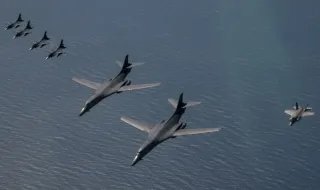
NATO's Supreme Allied Commander Europe Alexus Grinkevich is developing a strategy to achieve a quick victory in the event of a Russian attack on the Alliance's eastern flank, focusing specifically on the integration of new defense technologies, such as drones and artificial intelligence, Bloomberg reported, citing an unclassified version of the document "Theory of Victory".
Grinkevich is scheduled to present the document in Poland on October 12. According to officials and diplomats familiar with the matter, the document aims to clarify how the Alliance would respond to a possible invasion of NATO territory.
Sources said the document also aims to show allies how NATO would combine traditional weapons with new capabilities that emerged after Russia's full-scale invasion of Ukraine in 2022, while calling for increased defense investment and improved training.
The strategy emphasizes NATO's defensive nature and the need to avoid unintentional provocations, while also clearly emphasizing the need for a collective response to hybrid threats.
The strategy emphasizes that by demonstrating readiness, NATO aims to make an adversary conclude that victory is impossible.
In the event of an attack on NATO, however, the Alliance would deter the invasion through a combination of ground forces and other resources under the "NATO Eastern Deterrence Initiative" - a concept based on the use of low-cost drones, minimally manned systems and artificial intelligence-assisted strike guidance. NATO spokesman Colonel Martin O'Donnell declined to discuss the details of the plan, but stressed that the Alliance is "purely defensive".
"The Supreme Allied Commander Europe's theory of victory is simple: to maintain NATO's advantage. "Given the unstable and complex global security environment, we must now create the conditions to deter aggression and, if necessary, prevail in the event of an attack," he said.
It is worth noting that the head of Germany's Federal Intelligence Service, Martin Jaeger, said he sees a risk of armed conflict with Russia, noting that the confrontation between the two countries has acquired a "new, dangerous dimension". Media reports also indicate that Estonia is moving a key brigade from the town of Tapa to Jihvi - located 50 kilometers from the Russian border - as part of a strategy of "active defense" in preparation for possible Russian aggression.
Meanwhile, Lithuania and Poland are jointly developing an international evacuation plan to be activated if it becomes necessary to evacuate parts of the population of Lithuania, Latvia and Estonia across the border.