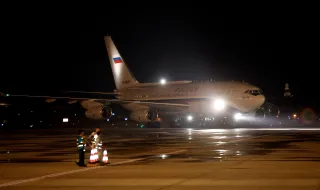
Russia has asked Vietnam to lease passenger planes to Russian airlines along with crews, maintenance and insurance. The proposal is under the “wet lease” scheme, in which the airline user receives not only the plane, but also the services necessary for its operation.
Russian Transport Minister Andrei Nikitin said that Moscow had sent the proposal, and Hanoi was considering it.
„We sent the relevant proposals to our colleagues, and they are considering them“, Nikitin said.
Vietnam's leading airline uses only Airbus and Boeing aircraft. This means that any deal with Russia would involve Western aircraft and expose Vietnamese carriers to the risk of secondary sanctions from the United States. It is this danger that led Ethiopia to reject such an offer. Moscow’s attempts to find aircraft in other countries in Asia, Africa and the Middle East have so far been unsuccessful.
Over 400 aircraft re-registered in Russia
The problems of Russian civil aviation began to deepen after the sanctions imposed after the full-scale invasion of Ukraine in February 2022. Then Moscow passed a law that allows airlines to re-register in Russia more than 400 aircraft leased from Western lessors, instead of returning them to their owners.
Dual registration of an aircraft is prohibited by international aviation law. But the International Civil Aviation Organization has no mechanism to force Russia to return the planes. Lessors have filed insurance claims worth about $8 billion, with some cases still pending.
Before the war, about 850 of Russia’s 900 commercial aircraft were made by Boeing or Airbus. About 85 percent of them were leased from foreign companies. With access to Western spare parts and technical services cut off, Russian airlines have begun using parts from one aircraft to maintain another.
These components must have a certified and traceable maintenance history. Parts removed from aircraft that have been cut off from Western service chains cannot legally be used on international flights. The Russian aviation agency issues its own certificates, but they are not recognized by aviation authorities in the European Union and the United States.
130 aircraft of the largest carriers are grounded
According to Russian industry data, 130 of the 673 aircraft of the country's 11 largest airlines are not in service. This is almost a fifth of the fleet, with a normal downtime rate of about 10 percent. Outside the "Aeroflot" group, 93 of 322 aircraft, or nearly a third, are grounded.
A separate problem is the shortage of aviation fuel. Fueling restrictions have been introduced at at least 26 major airports. In St. Petersburg, Kaliningrad, Yekaterinburg, Kazan, Ufa, Irkutsk and Vladivostok, fuel is limited to the amount needed for one flight. In Sochi, Volgograd and Astrakhan, the restrictions apply to all carriers.
The Russian Ministry of Transport and Industry, together with the state conglomerate “Rostec“, are also discussing a new fee on airline tickets. It could reach 500 rubles for a domestic flight and 1,000 rubles for an international flight. The funds will be used to purchase and operate Russian-made MC-21 and Tu-214 aircraft, which are more expensive to maintain than Boeing and Airbus. Analysts warn that higher prices could reduce the number of passengers and reduce airline revenues.
Sources: euronews.com, interfax.com