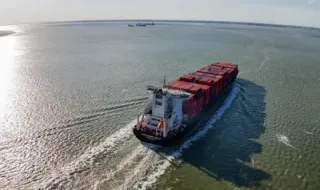
Saudi-backed Yemeni government forces have launched a counteroffensive to retake coastal areas around the strategic Bab el-Mandeb Strait and other key territories seized by the Iran-backed Houthis over the past month. The fighting is part of a complex conflict in which military and political alliances are constantly shifting.
Yemen's civil war has been going on for 12 years. It erupted after the Houthi movement, officially called “Ansar Allah”, seized the capital Sanaa in late 2014 and toppled the internationally recognized government of then-President Abd Rabbuh Mansour Hadi. In March 2015, Saudi Arabia led a military coalition to restore the government.
A truce brokered by the UN in 2022 largely halted heavy fighting but failed to produce a lasting political settlement. The new escalation is linked to the escalating conflict with Iran.
„Giants“ lead the offensive
The main role in the offensive against the Houthis is played by the military formation „A'Amalika“, known as „Giants“. It emerged in 2016 and is composed mainly of followers of the ultraconservative Sunni movement Salafism in southern Yemen.
Over time, „Giants“ are divided into separate factions. The largest is led by Abu Zara al-Muharrami, a member of Yemen's Presidential Guidance Council. He leads military operations along the Red Sea coast, from where access to the Bab el-Mandeb Strait is controlled.
One faction remains loyal to the United Arab Emirates, which withdrew its troops from Yemen in January after disagreements with Saudi Arabia. Another, known as the Homeland Shield Forces, has abandoned its alliance with the UAE and switched to Saudi support.
Houthis retain control of Sanaa
The Houthis remain the leading military force in the country. They control Sanaa and much of northern Yemen, and are estimated to be home to between 60 and 65 percent of Yemenis.
The Saudi-led coalition accuses Iran of arming, training and financing the movement. The Houthis deny that they are acting as proxies for Tehran and say they are developing their own weapons. Iran also denies the accusations.
During the war, the Houthis have used missiles and drones against Saudi Arabia and the UAE, including against oil facilities and other vital infrastructure. They are seen as part of an Iranian-backed regional alliance known as the "Axis of Resistance." During the Gaza War, the movement carried out rocket and drone attacks on Israel and attacked merchant ships in the Red Sea.
A divided camp against the Houthis
The internationally recognized governing body is the eight-member Presidential Guidance Council, headed by Rashad al-Alimi. It was established in Riyadh in April 2022 to replace Hadi and unite the forces opposing the Houthis. Instead, the council has been blocked by disagreements between the various factions.
The government relies heavily on Saudi air support, while various formations operate on the ground. Among them is the National Resistance Forces, led by Tareq Saleh - nephew of former President Ali Abdullah Saleh and a member of the Presidential Guidance Council. The group was created with the support of the UAE, but maintains ties with Saudi Arabia and declares itself a united Yemen.
A separate player is the Southern Transitional Council, which is trained and armed by the UAE and seeks the separation of South Yemen. Thus, the fight against the Houthis is being led by a coalition, formally united by a common enemy, but divided on the issue of who should govern the country and what its territorial shape should be.
Sources: bta.bg