Rats in the toilets, leaking roofs and broken radiators. Videos of French students on social networks document the poor state of the infrastructure in many schools in the country.
At the Lycée „Paul Eluard" in the Parisian suburb „Saint-Denis", one of the centers of the protest movement, young people talk about pests in the building and constant flooding. In the neighboring „Panten" students complain that windows cannot be opened and temperatures reach 40 degrees in the summer.
The photos on social media have become symbols of the nationwide student protests, the end of which is not yet in sight. The dissatisfaction stems not only from the poor condition of the buildings - in their demonstrations, students also complain about overcrowded classes and frequent cancellation of classes.
The problem with the central state
At the same time, France invests 6.7 percent of GDP in the education system - a relatively high percentage by European standards. But these investments do not lead to better learning conditions, which is probably also related to the distribution of responsibilities.
The state pays the salaries of teachers and determines the curricula, but local authorities are responsible for maintaining the buildings. Depending on the region, they have different financial capabilities and must plan renovation projects themselves. As a result, improvements are often either not made at all or are slow to come. In addition, more than two-thirds of the budget is earmarked for staff and pensions, meaning there is little left for investment.
Disastrous infrastructure
More than 80 percent of primary school buildings in France are over 50 years old, and between 10 and 20 percent of all school buildings are in dire need of renovation. Politicians are often aware of this - in the central region of “Île-de-France” alone, a €6.6 billion reconstruction and expansion program is being implemented for the period 2017-2027.
According to the regional government, two-thirds of upper-grade students there now attend new or renovated schools. But even if the mold has been removed and the roof repaired, there is no effective protection against the summer heat. It is also a bitter truth that new buildings or those that have just been renovated have also been damaged in the current riots.
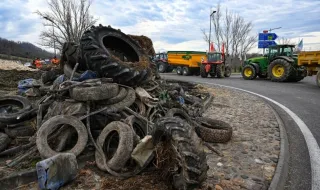
Across the country, students protest against neglected schools. Photo: Stephane Mahe/REUTERS
There is also an imbalance in current education spending. While the funds for upper grades are relatively large, France invests less in primary schools than the average for industrialized countries in Europe. And education experts point out that it is in these years that the foundations for subsequent success in school are laid.
Governments led by President Emmanuel Macron have tried to counteract this. Since 2017, the size of primary classes in socially disadvantaged areas has been halved, with 16,000 additional jobs for teachers created for this purpose. Now, due to student protests, the authorities want to provide around 3,000 substitute teachers.
This is the first time the government has responded specifically to the demands of students who have been demanding better facilities in high schools, more substitute teachers and investment in education for two weeks.
Increasing deficits
The results of the latest PISA survey from September this year show how big the current problems in the education system are. In mathematics, for example, more than a third of 15-year-olds do not reach the basic level of competence.
Macron's reform of high schools has also been criticized. The removal of the previous profiling in favor of individually selected subjects was supposed to give students more freedom. But the numerous combinations of subjects make it difficult to plan lessons. Young people complain about the large number of free hours and the length of the school day.
And the problems also reach higher education institutions. A teacher at a Parisian university tells of a seminar with 50 students for which they had to take chairs from neighboring rooms or sit on the floor. The administration has never taken any action.
French Prime Minister Sébastien Le Corneille wants to prevent the student protests from turning into a broad social protest movement. Photo: Dimitar Dilkoff/REUTERS
Missed classes and social inequality
Compared to other European countries, French students have a large number of classes during the school year. But many of the classes are missed - around nine percent, and only 12 percent of the missed classes are taken up by substitute teachers, according to a study from the 2024/2025 school year.
Another problem is the low pay of French teachers. Data from the Organization for Economic Cooperation and Development shows that French college teachers with 15 years of experience earn only half the salaries of teachers in Germany.
At the same time, despite assurances that all children should have equal opportunities regardless of their background, success in education in France today depends heavily on the social background of the parents. This is also evident from the fact that children from poorer families are more often affected by missing classes.
In principle, an additional 1.2 billion euros are planned for the Ministry of Education for 2027, but teacher positions will have to be closed due to the decreasing number of students.
Protest with an eye on the presidential elections
Social networks have long since ceased to be just videos of unmaintained school buildings - there are also demonstrations with Palestinian flags and political slogans that are not particularly related to education policy. Some footage shows burning barricades and clashes with the police.
The far-left party "France Insubordinate" (LFI) is particularly seeking proximity to the protest movement. Its deputies attend school blockades and distribute the relevant videos. The government accuses the LFI of deliberately exploiting the anger of the youth, a party it denies.
Half a year before the presidential election, the protest against educational unrest has long since turned into a struggle between political camps.
Source: www.dw.com