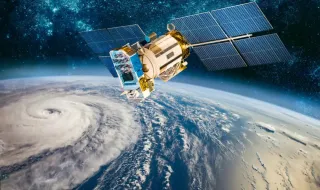
The US Space Force has terminated the operation of the last two satellites of the Defense Support Program (DSP), used for more than five decades for early warning of ballistic missile launches. The two devices operated until September 2026 at an altitude of 35,888 kilometers, after which they were moved to a higher, so-called graveyard orbit.
The end of the program was announced by the US Space Force after the participation of the last two satellites in a US Space Command exercise in early September. After the demonstration, the devices were decommissioned and moved to a hypersynchronous orbit, designed for non-functioning satellites.
The first DSP satellite was launched in 1970 during the Cold War. By 2007, the US military had sent a total of 23 devices into orbit. They were equipped with infrared sensors that detect the intense heat radiation from ballistic missile engines. The system scanned the Earth's surface about six times a minute.
After the end of the Cold War, DSP continued to be used in military operations. The satellites detected missile launches during Operation Desert Storm in 1990-1991. The same infrared sensors were also used to detect signs of natural disasters, including forest fires and volcanic eruptions.
Over time, the capabilities of the devices have been expanded. The first satellites weighed about 900 kilograms and had 2,000 infrared sensors, while the latter reached almost 2,400 kilograms and had about 6,000 sensors. The operational life of the newer models has exceeded 12 years, compared to about a year for the first devices.
“These latest two satellites mark the end of more than half a century of space-based early warning“, said Colonel Brandon Davenport, commander of Mission Delta 4, quoted by Air & Space Forces Magazine. He said the DSP system played a role in strategic deterrence during the Cold War and protected American service members during the Gulf War.
The termination of DSP does not mean the end of American space surveillance for missile threats. Its immediate successor is the SBIRS system, which includes six satellites in geostationary orbit and four sensors in highly elliptical orbit. The Space Force is also preparing the next generation, Next-Gen OPIR, the first devices of which are expected to be launched in the coming months.