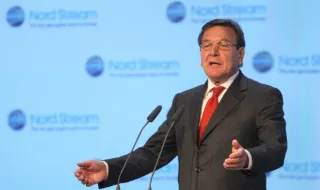
German Chancellor Friedrich Merz is deeply outraged by the visit of his predecessor Gerhard Schröder to Moscow, where the former head of the German government met with Russian President Vladimir Putin on the occasion of his 74th birthday. This was reported by Reuters, citing an official representative of the German government.
Deputy government spokesman Steffen Meyer said that Merz considers Schröder's participation in the celebration to be practically immoral against the backdrop of the ongoing war in Ukraine. According to him, the Russian president's actions daily lead to enormous human suffering, deaths and injuries.
A sharp reaction also followed from the German Social Democratic Party (SPD), to which Schröder belongs. Its co-chairman and Finance Minister Lars Klingbeil described the visit as “completely unacceptable”. Other Social Democrats also expressed outrage at the demonstrated closeness between the former Chancellor and the Russian head of state.
Schröder, who led Germany between 1998 and 2005, has maintained friendly relations with Putin for more than two decades. His ties with Moscow have repeatedly drawn criticism in Germany, especially since the start of the Russian invasion of Ukraine in February 2022.
According to Kremlin information, Putin learned from the media that the former German Chancellor was in Moscow on business matters, after which he invited him to a personal meeting. The two met on October 7, when the Russian president turned 74. The Kremlin presented the meeting as a visit to an old friend and published photos from it.
The visit coincided with a new stage in Schröder's business commitments in Russia. In early October, it became known that he had been appointed to the supervisory board of the Russian trading company “Hyperglobus“, which manages more than 20 supermarkets in the country. The company separated from the German holding company Globus Holding in January 2025.
On October 7, the former chancellor visited one of the chain's hypermarkets in Moscow, where he was greeted with applause from employees. He expressed satisfaction with the company's work and the opportunity to get to know its team.
The owner of “Hyperglobus“ and shareholder in Globus Holding Thomas Bruch explained Schröder's appointment with his many years of political experience and knowledge of the Russian economy. According to him, the presence of the former chancellor on the supervisory board will help the company maintain dialogue and find solutions in the current complex international situation.
Schröder's business relations with Russia date back to the period after leaving the chancellorship. He headed the shareholders' committee of the Nord Stream gas pipeline project, implemented with the participation of the Russian energy giant Gazprom. Later, he also held leadership positions in the Russian oil company Rosneft.
Despite sanctions against Moscow and the ongoing military conflict, Schröder did not break off his contacts with Putin. This led to serious tension between him and the leadership of the Social Democrats, who repeatedly distanced themselves from his positions.
In June 2026, Putin said that he would prefer Schröder to represent the European country in possible negotiations for new security arrangements. However, the proposal was rejected by both the German government and the European Union.
The former Chancellor's last visit to Moscow once again raised the question of relations between European politicians and the Kremlin. Representatives of the German Greens insisted that the possibility of a new procedure for his expulsion from the SPD be considered. A similar attempt in 2022 ended without Schröder's expulsion from the party.
However, not all German Social Democrats condemned the meeting. MP Ralf Stegner defended the former chancellor's right to maintain personal contacts with the Russian president, pointing out that Schröder is among the few German politicians who still have direct access to Putin.
The meeting in Moscow thus deepened the disagreements within the German political elite regarding contacts with Russia in the context of the ongoing war in Ukraine.