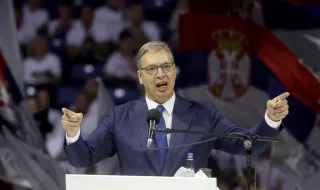
Former Serbian President Aleksandar Vucic has called the deal between Donald Trump and Vladimir Putin to export Russian diesel a breakthrough in the sanctions pressure on Moscow. According to him, the agreement concerns relatively limited quantities of fuel, but its political significance is much greater.
„The fact that the Americans have thus broken the chain of sanctions against the Russian Federation is much more important,“ Vucic said in a live broadcast.
What the agreement provides for
On October 9, Trump announced that after a conversation with Putin, Russia would immediately deliver over 300,000 tons of diesel fuel to the American and world markets. According to him, another 500,000 tons should follow in November, and then - another 1 million tons. Trump also indicated the possibility of a total of 3 million tons being delivered in the short term.
The US Office of Foreign Assets Control has temporarily authorized the supply of Russian diesel to the world market. Trump said the goal is for fuel prices in the US and around the world to fall quickly, amid rising prices ahead of the midterm elections.
According to Vucic, it is domestic political pressure that explains the US president's decision. "Cheap fuel is what Americans live and have lived for decades, and for the first time now this is not the case," he said.
Criticism from Kiev
Ukrainian President Volodymyr Zelensky described Washington's decision as "unfair and dishonest." He said that easing sanctions against Russia without an agreement to limit hostilities was "a clear weakness."
Zelensky warned that Russia's ability to sell oil products would provide additional revenue for the war. Kiev insists that any easing of sanctions be linked to mutual de-escalation and an end to attacks on energy infrastructure.
Vucic offered a different assessment of Moscow's motives. According to him, Russia is not only interested in revenue from fuel sales, but also in the political effect - weakening the sanctions regime and deepening disagreements between the United States and European countries.