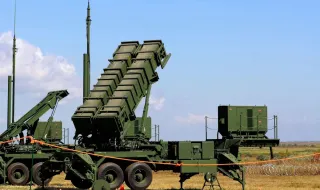
Houthi attacks on Saudi Arabia, including the attack on Riyadh International Airport that killed 13 people, have exposed the limitations of Saudi air defenses. The kingdom has expensive and sophisticated systems, but it must simultaneously defend a vast territory, energy facilities, airports, military bases, and holy cities.
Saudi forces have intercepted most of the missiles and drones aimed at the country. However, a few strikes have hit targets, including energy facilities and the capital’s airport. According to the Associated Press, the attack on the airport was carried out amid a series of attacks in recent days, with 12 victims initially reported, but the number later rose to 13.
The size of the country is the main challenge
Saudi Arabia uses the Patriot and THAAD systems, fighter jets and additional sensors to detect and intercept targets. However, this cannot turn the entire country into a protected zone.
The area of the kingdom is nearly 2.2 million square kilometers. Riyadh International Airport alone occupies about 225 square kilometers and is located nearly 35 kilometers from the center of the capital. According to Krieg, the authorities must constantly guard multiple sites located at great distances from each other.
The frequent attacks also create a problem with availability. Each successful interception requires a missile, and stocks of such ammunition are limited worldwide. Thus, a sustained campaign can strain the system even when most attacks have stopped.
How the Houthis Exploit Weaknesses
The Houthis do not need to overcome Saudi defenses with every attack. It is enough for some of the missiles and drones to reach well-defined targets to cause disruptions, casualties and a strong public response.
According to security analyst Thomas Junot of the University of Ottawa, the Houthis are seeking to transfer the pressure that the kingdom is exerting through its military actions in Yemen onto Saudi Arabia. Strikes on Saudi infrastructure are intended to show that the conflict will not remain confined to Yemeni territory.
The missile and drone attacks on Riyadh airport are particularly significant because the site is linked to Crown Prince Mohammed bin Salman's "Vision 2030" plan. The strategy envisions Riyadh becoming a hub for tourism, international events and large companies. According to Krieg, it is this symbolic and economic role that makes the airport an attractive target.
A blow to security and credibility
The attacks do not only affect military infrastructure. They have economic and psychological consequences, especially when they occur during major international events. The 25th WPC Energy Congress is being held in Riyadh from October 11 to 15, 2026.
In the past, Saudi authorities have sent text messages warning of an expected attack. The suspension of these messages has caused alarm among citizens, and diplomatic missions have criticized the lack of timely information about the attack on the airport.
The kingdom continues to invest significantly in importing weapons from American, British and French companies. However, the analysis by Agence France-Presse shows that modern technology alone does not solve the problem of defending a vast territory when attacks are frequent, cheap for the perpetrator and aimed at multiple critical sites.
Sources: bta.bg, apnews.com, lemonde.fr