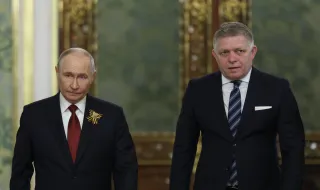
Slovakia is resuming the activities of an intergovernmental forum for cooperation with Russia, frozen after the start of the full-scale invasion of Ukraine in February 2022. Among the expected topics of the upcoming meeting are supplies of Russian gas and oil, nuclear fuel and restrictions on Russian athletes, reports “Politiko“, citing a Russian government document, News.bg reports.
According to the document prepared by Russian Minister of Science and Higher Education Valery Falkov, Slovak Foreign Minister Juraj Blanar gave his consent to hold a meeting of the Russian-Slovak Intergovernmental Commission during a video conference call on August 20. Slovak Prime Minister Robert Fico said that the meeting is scheduled for November 25. The document dated September 10 initially indicated the dates of October 26 and 27.
The commission is responsible for economic, scientific and technical cooperation between the two countries. Its last meeting - the 21st session - was held in Bratislava on November 12, 2021. The resumption of its work comes at a time when Moscow is looking for opportunities to restore its positions in international relations. The United States invited Russian President Vladimir Putin to the G20 summit in Miami in December, and the International Olympic Committee has taken steps to ease restrictions on Russian sports.
When asked about the committee’s alleged agenda, the Slovak Foreign Ministry referred to Blanar’s public statements after the August conversation. At the time, he said: “We are pursuing a policy in all directions and maintaining a dialogue with all countries that are interested in pragmatic cooperation with us in the interests of the Slovak Republic.”
The rapprochement between Bratislava and Moscow follows Fico’s visit to the Russian capital on May 9, when he met with Putin during Victory Day celebrations. It also comes against the backdrop of political upheaval in Hungary, where Viktor Orban’s defeat in parliamentary elections in April deprived the Kremlin of one of its closest EU partners. A few months before the elections, Orbán re-established the Russian-Hungarian intergovernmental commission for economic cooperation. The government of Péter Magyar has yet to confirm whether it will continue to operate next year.
Energy is emerging as a top priority for the upcoming talks between Slovakia and Russia. During the August video conference, Blánár expressed disagreement with the EU's planned gradual cessation of Russian gas imports and asked for the issue to be discussed in Moscow. According to the Russian document, Slovak representatives stressed the importance of continued oil supplies via the Druzhba pipeline and welcomed regular supplies of nuclear fuel for Slovak power plants.
Slovakia remains heavily dependent on Russian oil and gas. Fico argues that stopping imports would lead to higher costs. At their meeting in Moscow on May 9, Putin said that Russia would do what was necessary to meet Slovakia's energy needs.
The commission's agenda will also include other areas. The two sides plan to discuss the possibility of creating working groups on culture, tourism, agriculture and environmental protection. A discussion is also planned on the status of the Russian Center for Science and Culture in Bratislava.
According to the document, Falkov noted Blanard's disagreement with the alleged "discrimination against Russian athletes" in international competitions and indicated that the topic should be included in the meeting. In July, the International Olympic Committee lifted the suspension of the Russian Olympic Committee and said that its previous recommendations to limit the participation of Russian athletes no longer apply. In August, the World Archery Federation lifted restrictions on Russian athletes and officials. FIFA President Gianni Infantino also called for Russia to be allowed back into international football.
Moscow’s approach is reminiscent of its efforts to deepen ties with Hungary during Orban’s rule. In December, Budapest and Moscow agreed on a 12-point plan to expand cooperation in energy, trade and culture. The document was signed in Moscow after talks between then-Hungarian Foreign Minister Péter Szijjártó and Russian Health Minister Mikhail Murashko. According to “Politico“, the Slovak initiative shows similar ambitions to expand bilateral ties.
The publication notes that the Kremlin's desire for closer relations with Fico raises the question of whether energy dependencies can divert individual countries from a common European position on the war in Ukraine. A similar topic also arose after talks between Putin and US President Donald Trump, after which it was announced that Russia would supply diesel fuel to the US and world markets in order to lower prices. Such supplies would provide income for Moscow.
However, the question remains whether Russia will be able to fulfill its promises to increase supplies. Ukraine is stepping up drone strikes on Russian oil refineries to disrupt fuel supplies and limit the revenues with which Moscow finances its military actions. Earlier this month, Kiev said that Ukrainian attacks had disabled 51% of Russia's oil refining capacity.