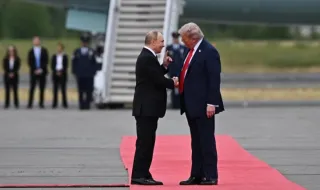
A bipartisan group in the US House of Representatives has introduced a bill to block the agreement between President Donald Trump and Russian President Vladimir Putin on supplies of Russian diesel. The initiative was introduced on October 16 by Congressman Gregory Meeks, the top Democrat on the House Foreign Affairs Committee.
The bill is titled Prohibit Corrupt Russia Oil Deals Act. Among its co-sponsors is Republican Don Bacon of Nebraska, who is the only Republican in the group. A total of 18 congressmen are listed as sponsors and co-sponsors.
What the bill provides
The text prohibits the US International Development Finance Corporation from investing in the Russian energy sector. It also proposes to cancel general licenses issued by the Treasury Department's Office of Foreign Assets Control, as well as prohibit the issuance of future licenses for Russian energy transactions.
The bill obliges the Trump administration to impose sanctions on the Russian energy sector. “This deal will not reduce costs for the American people. It will give Putin millions of dollars to continue waging war on Ukrainian civilians,“ Meeks said.
The announced deliveries and the temporary license
Trump announced on October 9 that Russia would deliver more than 300,000 tons of diesel to the US and global markets immediately. According to the plan he outlined, another 500,000 tons should be delivered in November, followed by 1 million tons and an additional 3 million tons in the short term.
Following the announcement, the Treasury Department issued a general license 135, which temporarily eases sanctions on Russian diesel. According to the Associated Press, the restrictions will not apply until April 2027 for Russian diesel loaded on tankers by October 9.
The agreement also drew criticism in the Senate. A group of 12 senators from both parties urged Trump to repeal it, saying allowing Russian diesel onto world markets would have "limited to no effect" on U.S. prices but would provide revenue for the Kremlin.
Next step is a vote
The new bill must be considered by the House of Representatives and, if approved, pass the Senate. To take effect, it must be signed by the president or overcome a possible presidential veto. No vote result on the initiative has been announced yet.
The Associated Press cited energy experts as saying that Russian supplies are unlikely to lead to a significant drop in U.S. diesel prices.
Sources: apnews.com, news.bloomberglaw.com, kyivindependent.com