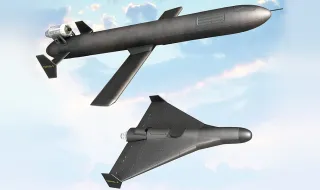
Russia has surprised Ukraine with the rapid development and mass use of jet attack drones, reports The Wall Street Journal. The new devices are faster than the previously used versions of the “Shahed“ and put Ukrainian air defenses in front of a shorter reaction time.
According to data cited by the American publication and Ukrainian estimates, Russia launched about 2,800 jet drones in August, compared to approximately 350 in June. The new models fly at speeds of up to about 600 km/h. “Geran-4“ develops between 300 and 550 km/h, while “Geran-5“ reaches approximately 600 km/h and approaches the characteristics of a small cruise missile.
The change is significant for the Ukrainian air defense, which for years has developed tactics against slower drones with propeller engines. The success rate in intercepting the new jets is between 50% and 60%, while the older “Shahed“ is over 90%, according to data cited by The Guardian. The jet drones can reach an altitude of up to 10 km, which puts them beyond the effective range of some mobile fire groups with machine guns.
Production has been accelerated
The Wall Street Journal points out that Russia has managed to redesign the older designs in several years, test them in combat conditions and move to mass production. The new weapons combine the lower cost of single-use strike drones with characteristics close to those of cruise missiles.
Ukrainian specialists have found Chinese components in the remains of Russian drones. These are jet engines, navigation equipment and communication electronics. Beijing says it controls the export of dual-use goods, but analysts quoted by the media describe the Russian program's dependence on Chinese parts as significant.
Kiev develops new interceptors
The Ukrainian government and private companies are accelerating the creation of their own high-speed interceptor drones. “We must admit that we were caught off guard by these “Shahed“ jets,“ said Stanislav Khryshchyn, co-founder of General Cherry, to The Guardian. The biggest obstacle, he said, is the shortage of small jet engines, and building up the necessary production capacity will take time.
Khryshchyn estimates that Ukraine will need three to four months to produce enough interceptors to match the scale of Russian attacks. Meanwhile, Ukrainian units are already testing and using separate systems capable of reaching the speed of Russian drones.
An additional problem arose in October, when speed limits on Starlink terminals slowed Ukrainian drones. The system is also used to control interceptor drones, and Ukrainian officials said that at reduced speeds they could not reliably catch up with Russian jets.
The technological race is already spreading to the European defense industry. Germany and Ukraine have agreed to expand joint work on systems to counter jet drones as Kiev tries to increase production before the winter period, when Russian strikes on energy and transport infrastructure traditionally intensify.
Sources: theguardian.com, united24media.com, apnews.com