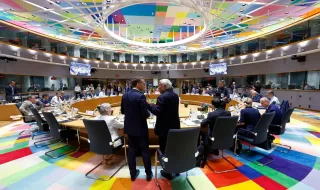
European Union leaders ended their two-day summit in Brussels without a final agreement on the multiannual financial framework for 2028-2034. The European Council set a target of concluding negotiations by the end of 2026, so that the necessary legislation can be adopted in 2027 and funding is not cut off from January 2028.
The Irish presidency presented a renewed negotiating package totaling €1.62 trillion. The proposal met resistance from countries that contribute more to the EU budget than they receive. Swedish Prime Minister Ulf Kristersson described it as “too big and too expensive”, while German Chancellor Friedrich Merz said member states could not afford to contribute at such a level.
Energy remains the immediate problem
The European Council identified high and volatile energy prices as a serious pressure on households, industry and the economy. Leaders called for a coordinated European response and supported the European Commission’s intention to extend the temporary framework for state aid for the most affected industrial sectors.
The Commission should also develop a short-term framework for better use of EU refinery capacity, as well as initiatives for voluntary energy demand aggregation. The European Council supported the proposal to postpone certain obligations under the methane regulation and called for additional measures if prices continue to rise.
The long-term plan remains linked to reducing dependence on fossil fuels through electrification, renewable and low-carbon energy sources, networks, energy storage and higher efficiency.
Support for Ukraine and new financing
Ukraine remained among the main topics of the meeting. European leaders confirmed their political, financial, humanitarian and military support for Kiev and tasked the European Commission to present a proposal for the country's additional financial needs in 2027.
“Our determination to stand by Ukraine and its people is stronger than ever“, said European Council President Antonio Costa. He pointed out that support for peace goes hand in hand with greater pressure on Russia, as its actions show escalation, not readiness to end the war.
At the meeting, Ukrainian President Volodymyr Zelensky requested additional aid of 70 billion euros for 2027. According to “Le Monde“ Kiev expects a shortfall of this amount, while already planned European support for current needs amounts to 45 billion euros. The leaders did not approve a new specific package, but commissioned a study of possible financing mechanisms, including the use of frozen Russian assets and a new European loan.
Migration, defence and enlargement
Antonio Costa said that illegal crossings of the EU's external borders were at their lowest level since 2021. However, the leaders called for further improvements to the system, especially in cases where migration is used as a tool of pressure, and expressed their readiness to discuss a new emergency framework.
The European Council also confirmed the course towards implementing the Defence Preparedness Strategy by 2030. The conclusions state that hybrid actions against member states will not go unanswered.
On the topic of enlargement, the leaders stressed that the process remains based on the implementation of concrete reforms. They welcomed the work on the accession treaty with Montenegro and the intention of the Irish presidency to advance the provisional closure of the remaining negotiation chapters, subject to the fulfilment of the necessary conditions.
The next political test will be related to the budget, energy and the financing proposal for Ukraine. Leaders plan a new informal meeting in early February 2027, dedicated to competitiveness and defense.
Sources: apnews.com, lemonde.fr