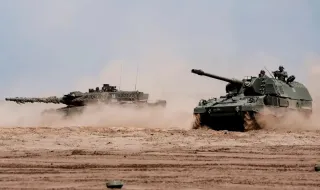
Ukrainian forces are once again using tanks and combat vehicles near the front line, but in a different pattern than the large-scale armored attacks at the beginning of the war. The vehicles move in small groups, usually two or three, and are covered by FPV interceptor drones and heavy bomber drones called "Vampire". This approach is described by Forbes in an analysis of video footage of combat operations in the Kharkiv region.
The footage shows a Ukrainian tank and an American "Bradley" combat vehicle moving along a road while Russian drones are aimed at them. One of the Ukrainian FPV vehicles intercepts a Russian drone before it reaches the armored vehicles. In parallel, "Vampire" drones reconnoiter the route, attack suspected Russian positions and assist the movement of the vehicles.
Metal structures against drones
The tank and the “Bradley“ are covered with an additional metal structure, known as “hedgehog armor“. Numerous rods protrude from it, which create a distance between the hull and the attacking drone. The goal is for the ammunition to explode before reaching the main armor and thus reduce the effect of the impact.
In one of the episodes shown, the “Bradley“ is hit by a “Lightning“ drone, but according to the video, the vehicle continues its movement. However, the additional protection does not provide complete safety. Forbes notes that with prolonged attacks, the vehicles can be damaged or disabled, especially if the drones reach their chains.
Small groups instead of armored columns
The tactic was used by the 475th separate assault regiment, known as CODE 9.2, in the Anishchyne and Vilhuvatka areas of Kharkiv Oblast. In a separate operation near Vilhuvatka, two tanks with massive additional protection operated, accompanied by FPV drones, a heavy "Vampire" drone, and a reconnaissance vehicle. According to observations by the Conflict Intelligence Team, the vehicles reached Russian positions, opened fire, and turned back, despite attacks by Russian drones.
Limiting the groups to two or three vehicles allows Ukrainian operators to maintain denser air cover. Larger columns are easier to detect and require significantly more drones to protect. The downside is that when a Russian aircraft is intercepted, the Ukrainian FPV drones must be replaced, and the “Vampires“ periodically return to recharge and replace batteries.
“This is an innovative approach that could allow Ukrainian forces to restore elements of tactical maneuver“, the Institute for the Study of War said in a combat assessment.The new scheme does not return tanks to their role from the beginning of the war. They are not used as a stand-alone strike column, but as a protected fire platform that operates in conjunction with drones, reconnaissance and small assault groups. The effectiveness of this model will depend on which side manages to secure local air superiority and disrupt the enemy's drone cover.
Sources: forbes.com, notes.citeam.org, euromaidanpress.com