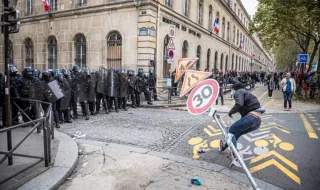
The riots in France over the weekend left behind damaged cars, looted shops, burned public buildings and injured people. Who will pay for the damage depends on the type of property, the insurance taken out and the severity of the physical injuries.
The government has provided for the extension of insurance coverage through a special guarantee for damage caused by riots, included in the budget law adopted in February 2026. However, in practice, the mechanism is not yet operational, as the necessary bylaws have not been adopted.
“The law provides for the transfer of responsibility from the state to the insurers, that is, to all insured persons“, Kenten Charluetto, an insurance lawyer at the firm “Simons & Simons“, told AFP.
Cars are only covered with an additional guarantee
An owner of a burnt or damaged car can receive compensation if his contract includes a guarantee „Fire“ or „All Risks of Damage“. With full „Casco“ insurance, damage to the car is covered according to the terms of the contract.
The mandatory „Third Party Liability“ insurance does not cover damage to your own car. It only compensates for damage caused to other persons. The amount of payment depends on whether the agreed value of the car as new or its market value is, as well as on the deductible and maximum limits.
Shops, buildings and lost income
Material damage to commercial premises and buildings is usually covered by the „Riots and mass public unrest“ guarantee, included in most contracts for shops and buildings. The compensation depends on the chosen coverage for fire, theft, glass breakage and other damages.
The loss of gross profit due to the closure of a store is only covered if a guarantee for loss of business income is included. Some contracts also provide for payment in the event of loss of income without direct material damage, but only under explicitly stated conditions.
The same principle applies to local authorities. Damage to public buildings, infrastructure, equipment and vehicles is covered according to the contracts of the respective municipality. Among the affected sites is the town hall in Limoges, which was set on fire.
What options do victims have
People with personal injuries can seek compensation under daily accident insurance, individual accident insurance or “Life“ with additional coverage for incapacity for work or disability.
In the absence of insurance or for additional payment, victims can contact the Fund for the Guarantee of Compensation for Victims of Terrorist Acts and Other Crimes through the Commission for Compensation for Victims of Crime.
In the event of death, permanent incapacity for work or total temporary incapacity for work for at least one month, compensation may be full. In the event of temporary incapacity for work for a shorter period, assistance is limited and is granted under certain conditions. There is also the possibility of public assistance of up to €5,000 if the victim does not exceed a certain income threshold.
The last option is a claim against the state. Article L.211-10 of the French Internal Security Code provides for civil liability for damage caused by crimes and offenses committed by armed or unarmed crowds and assemblies. Whether the conditions are met is decided by an administrative judge, and the procedures can last a long time.
Sources: bta.bg