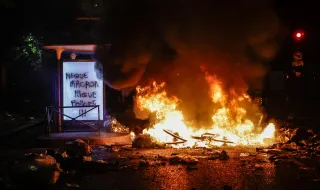
France is struggling to restore order after some of the worst civil unrest in years. Some 2,400 people have been arrested, more than 3,000 businesses damaged or looted, and the town hall in Limoges has been set on fire, the government said. Nearly 1,000 police officers have been injured in the clashes and one protester has died of cardiac arrest, according to the interior ministry.
The unrest erupted on October 17 during demonstrations against high prices, a lack of public services and deteriorating school conditions. In many cities, initially peaceful marches have turned into clashes with police, arson and looting. President Emmanuel Macron condemned the "unbridled violence" and the government began to introduce partial restrictions on movement and gatherings.
Government measures
In Paris, police banned access to the Place de la République and the area around the Les Halles shopping mall between 11 p.m. and 6 a.m. A curfew was imposed in several cities in northern France for people under 18, while in Nice, the restriction applies to minors between 9 p.m. and 6 a.m. The prime minister, Sébastien Le Corneille, said that possible measures should be "very limited" and targeted to specific locations.
Macron rejected the proposed resignation of Interior Minister Laurent Nunes. The president has demanded an end to the blockades and looting and to investigate whether there were any intelligence and training failures. Nunes said 60,000 police and other security forces had been deployed to guard Saturday's protests, but admitted that this was not enough to control the violence.
The government is preparing state-funded schemes to help affected employers avoid layoffs. Emergency liquidity assistance for businesses is also planned, but details of the size and distribution of the aid have not yet been announced. Insurers are expected to cover some of the damage.
End-of-term crisis
The unrest has put Macron under even greater pressure with about six months left in his presidency. France faces weak economic growth, high public debt and difficulties in passing the 2027 budget. A divided parliament limits the government's ability to respond with large spending programs, such as those used during the "yellow vest" protests in 2018 and 2019.
Former allies of the president link the current political impasse to his decision to call early parliamentary elections in 2024. Former Macron lawmaker Loic Quevran described the end of the mandate as "slow agony" and said the dissolution of parliament had paralyzed the country.
The events could strengthen the position of National Assembly leader Marine Le Pen ahead of the 2027 presidential election. “Le Pen no longer has to spend money on her campaign”, former lawmaker Jean-Baptiste Moreau told Reuters, linking it to the simultaneous increase in dissatisfaction with living standards and fears for public order.
New protests and financial pressure
Student organizations are calling for new demonstrations on October 24, and unions have scheduled strikes for November 5 against budget cuts and in support of higher wages. The government has promised to send about 3,000 qualified teachers to schools with shortages, but has so far made no commitment to significantly increase education funding.
The political instability has also affected financial markets. The yield on 10-year French government bonds reached 4.9 percent, and the spread over German bonds widened to 146 basis points. French stocks and the euro also fell as investors see it more difficult to adopt measures to curb the budget deficit.
Sources: marketscreener.com, apnews.com, investing.com