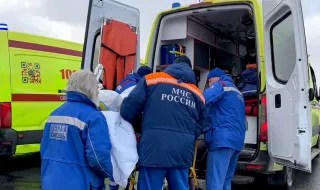
The death of an employee of an anti-plague institute in Irkutsk from severe pneumonia has called into question the ability of the international system to respond in a timely manner to potentially dangerous infectious diseases. The case attracted attention after it was initially reported as a possible pneumonic plague, but so far no confirmed cause of the disease has been identified.
The employee was hospitalized on September 29 and died on October 2. The World Health Organization initially received the information through media reports, then requested confirmation and additional data from the Russian authorities.
Moscow confirmed the death and said that there had been no recent cases of plague in the Irkutsk region. According to data provided to the WHO, tests did not detect plague or other high-risk pathogens from the tested spectrum. Russian authorities also said there was no biosafety incident at the laboratory and that there were no other cases of severe pneumonia linked to the deceased employee.
Contacts have been identified, tested and placed under medical observation in hospitals or at home. They have remained asymptomatic and observation has been completed. The WHO has found no evidence of ongoing transmission of the infection, but stresses that the lack of a confirmed diagnosis limits its risk assessment. The organization defines the death as pneumonia of unknown etiology and states that additional clinical, epidemiological and laboratory data are needed.
Warning of the consequences of the lack of information
The case has raised not only international questions about the transparency of the Russian authorities, but also a broader debate about the effectiveness of the International Health Regulations. They are a legally binding framework for 197 countries and require countries to notify the WHO of events with actual or potential international public health implications.
“If countries do not comply with the International Health Regulations, the likelihood of new infectious diseases getting out of control increases, potentially triggering the next pandemic“, says Lawrence Gostin, a law professor at Georgetown University and director of the WHO Collaborating Centre on National and Global Health Law.Rujin Habibi, a professor at the University of Ottawa, warns that incomplete information could provoke unilateral and hasty measures by other countries, including border closures. "If countries decide not to follow the rules, the International Health Regulations naturally become less effective," she says.
MEPs urge transparency
The European Parliament's Public Health Committee has raised concerns about the lack of transparency surrounding the case. Independent MEP Ondřej Dostal has pointed out that deteriorating diplomatic relations with countries such as Russia could make it more difficult to respond to a public health threat.
So far, confirmed data shows one person has died, the cause of death is unknown and there have been no secondary cases. The WHO continues to monitor the situation until the cause and circumstances of the infection are clarified.
Sources: politico.eu