In the early hours of October 23, 1983, two truck bombs were used as weapons against the US and French contingents of the Multinational Force in Beirut. One truck broke through security and reached the building housing US Marines near the international airport. The explosion collapsed the four-story barracks and killed 241 soldiers – 220 Marines, 18 sailors and three army soldiers.
A few minutes later, a second bomber attacked the French post "Drakkar" in western Beirut. 58 French paratroopers from the 1st and 9th Parachute Regiments were killed. The French Ministry of the Armed Forces stated that the building had been used by the units for less than a month before its destruction.
The mission of the Multinational Force
American, French, Italian and British soldiers were sent to Lebanon in 1982 after the Israeli invasion and the evacuation of the Palestine Liberation Organization from Beirut. Their task is to help stabilize the capital, assist in the withdrawal of foreign forces, and support the Lebanese government during the civil war.
Until the attacks, however, the American presence was increasingly perceived by armed Shiite groups as support for the Lebanese government, rather than as a neutral peacekeeping mission. In April of that year, an attack on the American embassy in Beirut killed 63 people, including 17 Americans.
The dispute over the perpetrators
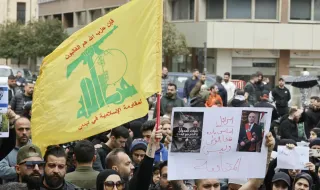
On the day of the attacks, an organization calling itself “Islamic Jihad“ claimed responsibility. The group was described as a pro-Iranian Shiite structure linked to the network that later formed “Hezbollah”. US authorities later officially attributed the attack to "Hezbollah", while representatives of the organization denied carrying it out.
The US Department of War commission investigating the attack concluded that it was a terrorist act carried out with the aim of disrupting American targets in Lebanon. The report stated that the building was vulnerable to attack and was a symbolic target because of the concentration of military personnel there.
"There are no words to express our outrage at this heinous act", declared President Ronald Reagan on the day of the attacks.Aftermath
After the attacks, the United States, France, Italy, and Britain maintained a presence in Lebanon for a short time, but fighting and political pressure gradually made the mission unfeasible. The American withdrawal ended in February 1984, and the multinational force withdrew from Lebanon that same year. The attacks remain among the deadliest in U.S. Marine history and a turning point in international involvement in the Lebanese Civil War.
Sources: apnews.com, history.com