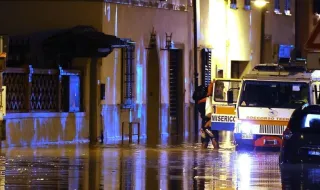
The European Commission will present new rules that will require member states to clearly indicate which institutions are responsible for protecting the population from floods, forest fires, prolonged heat waves and other climate disasters. The measures are part of the European Union's preparation for a scenario in which global warming reaches 3°C by the end of the century.
European Commissioner for Climate Action Wopke Hoekstra warned that the world is moving towards temporarily or potentially permanently exceeding the 1.5°C threshold set in the Paris Agreement. He said this meant governments had to prepare for more prolonged heatwaves and severe natural disasters, even if efforts to reduce emissions were successful.
“Member states must decide for themselves who to give this responsibility to. What we are making it mandatory is that they clearly define and indicate who will bear it“, Hoekstra said.Governments will retain the freedom to allocate powers between national, regional and local authorities. However, they will have to designate the responsible institutions in advance to avoid disputes in case of damage from floods or fires.
Scenarios predict 3°C by 2100.
The scenarios considered by the European Commission predict global warming of 2°C by 2050 and 3°C by 2100. The assessments also include the conclusion that Europe is warming approximately twice as fast as the global average. The projections are based on scientific research, including from the Intergovernmental Panel on Climate Change, as well as European climate models.
Hoekstra pointed out that with warming of 3°C, cities will need plans to cope with the heat, and infrastructure must be designed according to future climate conditions, not just according to past data. This applies to roads, bridges, housing estates and public buildings.
“Even if we do everything right, we cannot avoid more summers like the one we experienced last year“, the European Commissioner warned.According to Hoekstra, the economic damage from extreme weather events this summer exceeds €100 billion. The costs include rebuilding after forest fires and floods, as well as protecting homes, roads and other public infrastructure.
Means for households remain unclear
The climate resilience strategy is not expected to include new financial commitments to support households. This raises the question of how lower-income families will be able to pay for the necessary improvements to their homes.
Hoekstra pointed to the proposal to devote 35% of the EU budget to climate and nature. Brussels is also counting on the planned €30 billion in financing from the European Investment Bank for climate change adaptation by 2030. However, these funds will be part of broader investment mechanisms, rather than a new program to directly help households.
The European Commission also intends to strengthen cooperation with the insurance sector. According to a senior Commission official, only about 25% of assets exposed to climate risks are insured. This leaves countries and property owners vulnerable to large financial losses in the event of disasters.
“We want to build a culture of preparedness and resilience at the design stage, rather than dealing with the damage afterwards“, said a European Commission representative, quoted by “Focus“.
The effectiveness of the measures will also depend on the negotiations for the next multi-annual EU budget, in which climate spending competes with funding for defense, security, competitiveness and agriculture.
Sources: focus-news.net, euronews.com