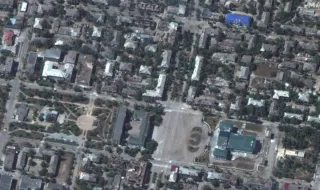
The local humanitarian ceasefire in the Ukrainian town of Oleshki is being observed for a second day, Ukrainian Ombudsman Dmytro Lubinets and Russian Commissioner for Human Rights Yana Lantratova confirmed. The ceasefire was agreed with the assistance of the United States to allow for the delivery of aid and the evacuation of civilians from the town in Kherson region occupied by Russian forces.
„30 hours have passed since the ceasefire in Oleshki began, without a single incident being recorded“, Lubinets said.
The ceasefire is an extremely rare occurrence amid the nearly five-year war. It was announced by US First Lady Melania Trump and covers an area where the front line runs along the Dnieper River.
About 2,000 people remain in the town
Approximately 2,000 people are still in Oleshki. They have been experiencing a shortage of food, water and medicine for months. The town has been subjected to drone strikes from the Ukrainian and Russian sides, and travel on the roads is extremely dangerous due to mines.
Former residents of Oleshki, who maintain contact with people in the town, told Agence France-Presse that some of the remaining civilians were forced to catch and eat pigeons. Reports of the dire humanitarian situation are also linked to the lack of a safe escape route.
The bridges over the Dnieper have been destroyed, which practically blocks the passage to territories under Ukrainian control. The Russian-appointed local authorities have admitted that those wishing to leave could be directed through the Crimean peninsula annexed by Moscow. According to Russian officials, most of those who wanted to leave the town have already done so. A senior Ukrainian official, who spoke on condition of anonymity, told AFP that a significant number of residents prefer to stay.
A humanitarian operation is to begin after the ceasefire
The agreed operation includes the delivery of food, water, medicine and other essential supplies, as well as the evacuation of civilians wishing to leave Oleshki. Initially, safe conditions must be provided for the movement of humanitarian teams and vehicles.
Ukrainian lawmaker and negotiator David Arakhamia described the ceasefire as the “most significant de-escalation” since the start of the full-scale Russian invasion of Ukraine in February 2022.
Previous short-term ceasefires, announced on occasions such as Orthodox Easter, have led to a reduction in airstrikes and long-range artillery fire. However, Kiev and Moscow have accused each other of numerous violations along the front line.
Sources: bta.bg, apnews.com