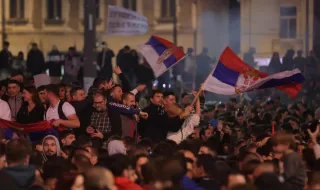
Serbia's Student List has taken power with a promise of a complete overhaul of the country and without a clear leader. The movement won parliamentary elections, and Aleksandar Vucic's party was removed from power.
All 141 selected candidates were nominated by students from universities across Serbia. The selection process lasted months and was organized in secret, with the aim of assembling a team capable of implementing the movement's political program.
1,200 pages for change
The program is compiled into a 1,200-page plan agreed upon by a diverse group of students. Now it is up to the new MPs, most of whom have no previous political experience, to implement it.
Among them is Radomir Sajičić, a professor of organic chemistry at the University of Belgrade. He told the BBC that the practical mechanisms would be worked out on the fly, but those elected would stick to the detailed student plan.
“Parliament makes the decisions, but since this change was driven by the efforts of students, we will highly value their opinion and work closely with them,” said Sajičić.The initial focus of the new government is expected to be on internal reforms. Vučić has already warned that the defeated Serbian Progressive Party will oppose the new majority.
“We will defeat them much faster than they can imagine“, Vučić said.Between Brussels, Moscow and Beijing
The new government will have to maintain a balance between Serbia's different foreign policy directions. The country is a candidate for membership in the European Union, but at the same time maintains close relations with Russia and China.
The European Union welcomed the victory of the Student List and promised support for reforms in the areas of the rule of law, media freedom and the fight against corruption. However, European integration occupies a limited place in the students' manifesto. It mainly describes the EU as Serbia's most important economic partner.
Belgrade did not join the sanctions against Moscow after the start of the full-scale Russian invasion of Ukraine in 2022. Russia, for its part, provided preferential gas prices, and Vladimir Putin publicly supported Vucic's bid to remain in power.
Dejan Soskic, who is among the recognizable figures in the new majority, does not expect a change in foreign policy to be among the first tasks.
“Serbia has its own experience with sanctions in the 1990s, and we know that they mostly harm ordinary people, without affecting the policies of the state,“, Soskic said.The new government has limited time before the next election campaign. Presidential elections are scheduled for December, and Aleksandar Vucic is not eligible to run for a third term.
Sources: bbc.co.uk