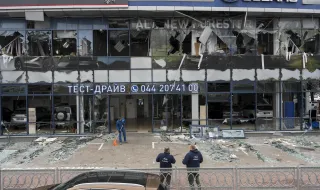
Russia is stepping up daily strikes on Ukraine as part of a campaign aimed at making everyday life unbearable for the civilian population, causing significant casualties and damaging the Ukrainian economy. This is the assessment of analysts from the American Institute for the Study of War (ISW).
According to ISW, Russian forces have increased the ferocity and duration of attacks in 2026. The strikes are often deployed over several days, with the Russian army exploiting vulnerabilities in Ukrainian air defenses and introducing new technological solutions, including quasi-cruise missiles “Banderol“.
“Moscow is trying to create additional hardship for the Ukrainian population before the winter of 2026-2027, as the Kremlin likely believes that these long-range strikes can distract attention from Ukraine's recent successes on the battlefield and ultimately force Ukraine to surrender by making everyday life unbearable for civilians,“ analysts say.Victims in the strikes on 29 October
ISW points to the attack on the Dnipro railway station as an example of the possible consequences when even a small percentage of the launched drones get through Ukrainian defenses. The strike on the platform on which the electric train No. 866 was located in the Dnipro-Zaporozhye direction killed 14 people.
The center of Chernihiv was also hit by a “Banderol“. Two 15-year-old girls were killed and at least nine people were injured. Damage was caused to homes, cars and business premises at the scene.
In another attack in Kremenchuk, a multi-story residential building was hit. According to data cited by UNIAN, three people were killed and 19 were injured. Mayor Vitaly Maletsky said that apartment blocks and residents' cars were damaged.
The dispute over the humanitarian crisis in Oleshki
In its analysis, ISW also examines the situation in the occupied Oleshki in the Kherson region. According to the institute, Vladimir Putin has tried to shift responsibility for the humanitarian crisis onto Ukraine, accusing Kiev of mining the approaches to the city.
ISW points out that the Russian occupation authorities are responsible for restricting humanitarian supplies and evacuation routes. According to their assessment, food and medicine supplies to the settlement were suspended in May 2026.
The analysts also claim that the Kremlin's rejections of three local humanitarian ceasefire agreements proposed by Ukraine led to the use of drones to deliver food in September. According to ISW, Russian forces shot down the drones carrying the aid.
Sources: unian.ua