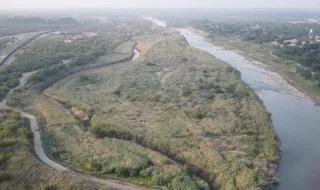
Mexico has rejected Texas' claims to nine islands in the Rio Grande River, known in Mexico as the Rio Bravo, and stated that the international border cannot be changed by a decision of the state government. The position was set out in an official note from the Mexican Foreign Ministry.
„The border between Mexico and the United States cannot be changed by a decision of the state government. Its borders are determined by the criteria established in an international treaty“, the document states.
The dispute began after the Texas Department of Land Management, headed by Commissioner Dawn Buckingham, declared nine islands as state property. The decision was made after a request from U.S. Customs and Border Protection regarding 28 islands in the river, whose ownership has not been definitively established.
In letters dated October 26, Buckingham granted the Texas Department of Public Safety and the Texas Department of the Army access to the nine islands. This allows for patrols, vegetation clearance and other activities related to securing the southern border. The islands total about 66 acres, or approximately 27 hectares.
Texas authorities say the islands could be used by criminal groups to smuggle and transport migrants. Buckingham linked the decision to previous actions by US authorities on Fronton Island, where in 2023 vegetation was cleared as part of Operation “Flat Top“.
What does the 1970 treaty provide?
The Mexican Foreign Ministry points out that under the 1970 Boundary Treaty, the line along the Rio Grande runs through the center of the normal bed of the river. It is this criterion that determines sovereignty over the lands of both sides, regardless of their previous ownership.
Under the treaty, the International Boundary and Water Commission is the body authorized by the governments of Mexico and the United States to implement the agreements and determine which country each island belongs to. “No state authority has such powers“, the Mexican Foreign Ministry stated.
The Mexican side added that neither country can build facilities that the commission considers capable of obstructing the natural flow of the river. The treaty of November 23, 1970, was created precisely to settle border disputes and to preserve the Rio Grande and the Colorado River as international borders.
Mexico stated that it would monitor actions in the border area and insist on compliance with bilateral treaties. The next steps on the issue should be discussed through the established mechanisms between the two countries, including the International Boundary and Water Commission.
Sources: elpais.com, jornada.com.mx, texianpartisan.com