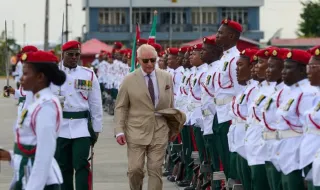
King Charles III visited a site in Guyana's capital, Georgetown, where participants in the 1823 Dimerara Rebellion were publicly executed during British colonial rule. The king stopped at “Independence Park“, listened to a history of the site and viewed a plaque commemorating those sentenced to death.
Charles was accompanied by Guyana's Minister of Culture Stephen Jacobs. According to PA Media, 33 people associated with the uprising were hanged at the site. It broke out among thousands of enslaved workers on plantations along the Dimerara River and was suppressed by military force. Hundreds of people were reportedly killed, with the executions intended to intimidate the remaining population.
The visit came amid long-standing calls for Britain to apologise for its role in the transatlantic slave trade and support financial reparations. Guyana's President Irfan Ali told ITV News that Charles "was right to recognise slavery as one of the darkest days in human history", but added: "The next step is an apology."
War dead remembered
Earlier, the king attended a ceremony at the Timehri memorial in Georgetown. He joined Prime Minister Mark Phillips in laying a wreath at the memorial to British, Guyanese and other Commonwealth servicemen who died in the line of duty.
The memorial commemorates 24 British-Guyanese servicemen who died in the two world wars. Charles, who is patron of the Commonwealth War Graves Commission, also met with veterans of the British Guiana forces that existed before the country gained independence in 1966.
Among them was 100-year-old James Samuel, who volunteered in 1943. He told the king that after serving in the RAF he moved to London but faced racial prejudice when looking for work. “I couldn't get a job. "I was the only black person and they told me that black people from the colonies couldn't run a telephone exchange," Samuel was quoted as saying by ITV News.
Calls for apology persist
Charles did not issue a formal apology for slavery during his two-day visit to Guyana. The British government has consistently rejected calls for an apology and reparations, while Caribbean leaders have insisted the issue be discussed at a meeting of Commonwealth heads of state and government in Antigua and Barbuda.
The visit to Guyana was part of the king's nine-day tour of the Caribbean and came in the year the country celebrates 60 years of independence from Britain. In addition to the colonial past, his program was related to the protection of forests, biodiversity and relations with local communities.
Sources: apnews.com, itv.com, aol.com