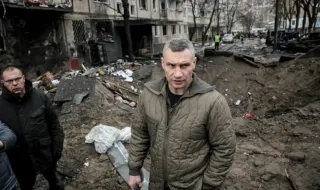
Kiev is entering its fifth military winter with insufficient shelters, limited heating capacity and an energy grid that is already subject to daily outages. Against this background, public discontent against Mayor Vitali Klitschko is growing, and his dispute with President Volodymyr Zelensky is becoming a separate front in the political tension.
Russia has changed its tactics and expanded the list of targets. In addition to energy facilities, water supply and treatment plants, production halls, food warehouses, shopping malls and bridges are under attack. Ukraine's air defenses are short of ammunition and equipment, and residents don't know where the next missiles and drones will land.
Lack of shelters and heating
Officially, Kiev has 4,358 shelters, but only about 500 of them are real bunkers. In most cases, these are basements of residential or public buildings, which are not always accessible to everyone. About a fifth of residential buildings are located more than 500 meters from the nearest shelter. With missiles reaching the capital in about two minutes, this distance could be decisive.
Problems with water supply and sewage have been accumulating for years. The outdated network from the Soviet era has already shown its vulnerability. Last winter, emergency power outages caused pressure surges that burst thousands of pipes in homes and underground infrastructure.
Kiev has about 80 mobile boiler houses with a total capacity of about 70 megawatts. That’s about a third of the capacity Kharkiv has, even though Kiev has twice the population. Small thermal power plants have a capacity of about 60 megawatts, with about 200 megawatts needed to support critical infrastructure at peak times. After the missile strikes, none of the city’s three large thermal power plants are operational.
The Klitschko Outcry
Klitschko, who has been mayor since 2014, has called on residents to temporarily leave Kiev. But for many, that’s not a realistic option. “In safer cities in western Ukraine, housing prices are exploding, and Kiev is home to almost three million people. Where will everyone go?“, asks 33-year-old IT specialist Oleg. He says he is already left without water in his apartment when the power goes out.
On October 17, about 500 people protested in front of the city hall demanding Klitschko's resignation. The demonstration was organized by city activists under the slogan “Klitschko, resign!“. The dissatisfaction is related not only to preparations for the winter, but also to accusations that during the war funds were directed to projects with a lower priority than shelters and infrastructure.
“For Klitschko and his deputies, urban development does not serve to improve the city, but is a source of funds for their friends,“, claims Oleksandr, one of the organizers of the protest. According to him, large projects facilitate the diversion of money. Klitschko has not been personally convicted of corruption, but his entourage is under investigation for illegal land and property deals.
The political conflict is deepening
Zelensky has publicly criticized Kiev's preparations and pointed out that other Ukrainian cities are ahead in implementing resilience plans. Klitschko rejects the accusations and claims that the central government is using the crisis to weaken local self-government.
On October 27, Zelensky instructed the prime minister to create a management team to help Kiev prepare for winter. Thus, the dispute is no longer limited to the question of who is responsible for shelters, heating and water supply. It is also turning into another battle between the presidential power and the mayor of the capital.
Sources: nzz.ch, kyivindependent.com