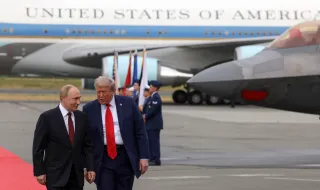
Donald Trump's policy towards Russia has also provoked resistance among some Republicans in the US Congress, after the president eased the sanctions pressure on Moscow and increased his criticism of Ukraine. According to Reuters, this could make it difficult to push through his legislative priorities after the midterm elections on November 3.
In an attempt to return Russian President Vladimir Putin to the negotiating table, Trump lifted sanctions on Russian diesel exports and exempted recently introduced restrictions on Russian officials, oligarchs, banks and state-owned enterprises. At the same time, he called for Ukrainian President Volodymyr Zelensky to be removed.
Bipartisan criticism in Congress
In a letter dated October 15, 17 Democrats and five Republicans in the House of Representatives urged Trump to fully and without delay implement the sanctions provided for in the Graham law. The law was approved by Congress by a large majority and signed by the president in mid-September.
Among the signatories are Brian Fitzpatrick, Joe Wilson, Michael McCaul, Don Bacon and Dan Newhouse. Fitzpatrick warned that any attempt to limit the use of the Starshield system, through which Ukraine receives warnings of Russian attacks, would be “subject to a full investigation“ by Congress. He also threatened “severe punitive budget cuts“ for the responsible agencies or their leaders.
Reuters also reported restrictions on a satellite communications system used by Ukraine that supports drone operations. Details of the reasons and extent of the restrictions remain a subject of political dispute in the United States.
Budget laws could become a battleground
After the election, Congress must consider a bill to fund defense programs for another year, as well as measures for government spending until September 30, 2027. They include funds for the Pentagon and intelligence agencies.
Lawmakers can use these texts to try to change or cancel the president's decisions on Russia. If Trump were to veto it, it would set up a new political standoff between the White House and Congress.
James Lindsey of the Council on Foreign Relations said that Republican discontent was to be expected given the bipartisan support for Graham's law. He said that even if Congress overcomes institutional and partisan divisions and the presidential veto, it will not guarantee that Trump will take the necessary action or comply with the restrictions imposed.
Not all Republicans back down from the president
Republican Senator Ted Budd defended the change in approach to Putin. He said the Russian diesel deal was a small financial concession but could serve as a symbolic gesture to keep Moscow in talks to end the war.
“It's actually a very small dollar amount for Russia, but it's enough as a symbolic gesture to bring them to the negotiating table and end their aggression against Ukraine,“ Ted Budd said.House Speaker Mike Johnson, a close Trump ally, also expressed reservations. He said Congress had already voted strongly on the sanctions issue and added: “We understand that Putin cannot be trusted.“
White House spokeswoman Taylor Rogers said Trump wanted the war to end and reserved the option to reinstate restrictions if he deemed it in the national security interest. The election result will determine whether Republicans will retain their fragile majorities and how strong the resistance to the president's course towards Russia will be.
Sources: bta.bg, investing.com