Kyiv can cover only around 5% of its needs with its own electricity generation. The capital has 70 megawatts of distributed generation capacity, while winter consumption reaches approximately 1,800–1,900 megawatts.
“Kyiv covers approximately 5% of its own consumption,” Volodymyr Omelchenko, director of the energy programmes at the Razumkov Centre, told UNIAN. According to him, the gap between the available local capacity and winter demand is around 25 times.
The Attack Left Areas Without Electricity and Hot Water
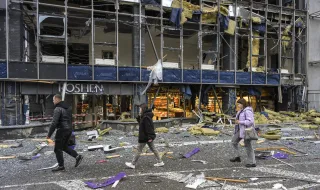
The data was presented following the Russian attack on an energy facility in Kyiv on the evening of October 30. Distribution substations on the territory of one of the capital’s thermal power plants were affected. Many areas subsequently experienced power outages, as well as problems with the supply of hot water.
Energy expert Gennady Ryabtsev expects repairs to the damaged facility to take several days. According to him, restoration work and strict outage schedules could continue approximately until the middle of the week.
Expert: Measures Were Started Too Late
Omelchenko believes that Kyiv should have launched an energy resilience programme as early as 2022. According to him, the authorities have not done enough on the issue for almost five years, while the current measures were taken too late.
“The time has already been lost, which is why we are seeing this situation,” Omelchenko said.He points out that limited local generation leaves the capital heavily dependent on supplies through Ukraine’s integrated power system. In the event of damage to key facilities, this makes the restoration of electricity supplies more difficult and increases the risk of prolonged outages.
An additional problem is the delivery of equipment needed for repairs. Alexander Kharchenko, director of the Energy Research Centre, warns that delays caused by European bureaucracy could affect the speed of restoration and the duration of the outages.
Sources: unian.net