Vladimir Uglev, one of the creators of the nerve agents from the “Novichok” group, has died at the age of 80. His death occurred on October 26, The Insider reported. The circumstances surrounding it have not been disclosed. In recent years, Uglev lived in Anapa.
The chemist advised The Insider during the preparation of investigations into the use of “Novichok” by Russian intelligence services. His name became widely known in 2018, when he gave a series of interviews following the poisoning of Sergei and Yulia Skripal in Salisbury, United Kingdom.
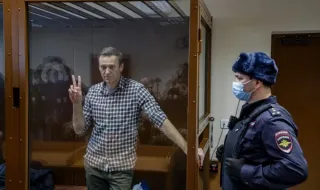
In 2020, Uglev again commented on the properties of the toxin following the poisoning of Russian opposition politician Alexei Navalny. The Organisation for the Prohibition of Chemical Weapons confirmed that biomarkers of a cholinesterase inhibitor with structural characteristics similar to chemicals from the “Novichok” group had been found in samples from Navalny.
His work on developing the substances
In 1975, Uglev graduated from the D. I. Mendeleev Russian University of Chemical Technology with a degree in “Chemistry and Technology of Biologically Active Substances.” From 1975 to 1990, he worked as a senior research fellow at the Volsk branch of the State Research Institute of Organic Chemistry and Technology.
The institute was involved in the development of toxic substances. During the same period, the 33rd Central Research and Testing Institute of the Ministry of Defence, located in Saratov Region, was engaged in the creation and development of “Novichok”-type agents.
It was there that Uglev worked on the first substances in this group until 1990, before the official destruction of the chemical weapons. “Novichok” is a general name for a group of highly toxic nerve agents covered by the chemical weapons prohibition regime.
Following the poisonings in Salisbury and the attack on Navalny, Uglev began speaking publicly about the chemical properties of the substances and how they could be used. His comments were sought by media outlets investigating links between the chemical weapons programme and Russian intelligence services.
Sources: news.bg, theins.ru