November 4 is a painful date for Hungary — on this day in 1956, tens of thousands of Soviet soldiers entered the country with tanks and bloodily crushed the anti-communist revolution. Decades of dictatorship followed, brutally defending its power — including with the help of the Hungarian State Security service.
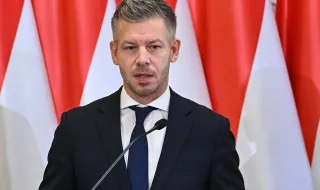
It is symbolic that it was precisely on November 4 this year that the belated reappraisal of one of the most sensitive parts of this past began. Péter Magyar’s government decided that the files should be opened and the agents who had been informers for the State Security service should be revealed. Most of them carried out this activity knowingly, but in some cases it happened without their knowledge or without them writing denunciations.
Opening the files was one of Magyar’s and his Tisza party’s campaign promises. The fact that the documents will become publicly accessible is a historic event, since the debate over the files has been going on for more than three decades. By deciding to open them, the government is also giving impetus to a debate about guilt and responsibility.
On this occasion, the prime minister wrote on Facebook: “We are fulfilling one of Tisza’s most important promises and opening the files of the socialist dictatorship. This is a long-overdue, complex and delicate issue that will affect many families. But without it, a change of the system cannot be achieved.”
Fidesz has voted against it more than 30 times
As early as the period of change in 1989/1990, and throughout the following decades, a number of human rights activists and smaller Hungarian parties repeatedly called for the files to be opened. The first opponent of this step was Hungary’s first post-communist prime minister — the conservative József Antall — while later the opening was blocked by the Socialists and particularly persistently by Viktor Orbán’s Fidesz party. Since 2010, Fidesz has voted more than 30 times against the disclosure of the documents.
Nevertheless, the files began to be partially opened in the 1990s — a 1994 law required the pasts of government members, MPs and certain people holding administrative positions to be checked for affiliation with the State Security service. Since 1997, ordinary citizens have also been able to request access to their files, but initially without the possibility of finding out who had spied on them.
Selective opening of the files
However, the law also contained a number of provisions allowing broad interpretation, through which state agencies, such as the Ministry of the Interior, could obstruct the transfer of data to Hungary’s Files Commission — for example, if it was deemed that the information posed a threat to national security.
The selective opening of the files not only prevented Hungarian society from learning the full truth about the State Security service; it also allowed the documents to be used for party-political purposes, for example by releasing compromising information about a particular politician.
Explosive disclosure
Now Péter Magyar’s government is bringing this process to an end. As of today, the documents are available online, including the names of the informers. The data will also include the “cards” containing the most important information about a given agent, as well as the so-called “B Files” — one of the most extensive databases of recruited agents. And whereas the old Files Act provided significant opportunities to preserve confidentiality, this is now being abandoned.
The new access to the old documents carries political and social explosive potential. Estimates suggest that the files may contain information on between 50,000 and 150,000 informers for the Hungarian State Security service. At the same time, however, the director of the Files Commission, György Bendegúz Cseh, warned that “one should not believe everything the State Security authorities claim in their files”. In many cases, the documents are incomplete and unreliable, and many of the files have been destroyed.
Historian: “Hungary needs these debates”
Some observers are skeptical about the current disclosure of the files. Historian János Rainer, an expert on the history of the communist dictatorship in Hungary, said that opening the files would have made sense immediately after the end of the dictatorship. Now, however, it is more of a symbolic gesture.
Historian Krisztián Ungváry, the foremost expert on the State Security documents in Hungary, views the opening of the informers’ cards positively. It gives historians the opportunity to raise new questions, and society the opportunity for new debates, he told DW. In his view, Hungary needs such debates. “Social lies inevitably lead to a distorted attitude toward politics. The price for this was the 16-year rule of the Fidesz government,” Ungváry said. He also supports lustration — although after three decades, very few people would be affected by it.
Political settling of scores?
For now, lustration is not being discussed in the government. But for Péter Magyar, opening the files clearly contains an element of settling scores and is a personally important undertaking. In recent years, the issue had not been at the center of attention of the Hungarian public. Nevertheless, he turned it into an important campaign promise. The explanation is related to the fact that he is deeply interested in history, was raised with anti-communist values, and examining the past — especially the years of Orbán’s regime — is among his favorite topics.
When parliament amended the Files Act in mid-September, Magyar wrote on Facebook: “With 36 years’ delay, the Hungarian parliament today adopted Tisza’s initiative to open the files. Fidesz never supported the undertaking. I wonder why?” This was a hint, since although Fidesz is nominally considered an anti-communist party, there are many well-known figures in its ranks and in Orbán’s circle who in the past were members of the ruling communist party in the Hungarian People’s Republic or were agents of the State Security service.