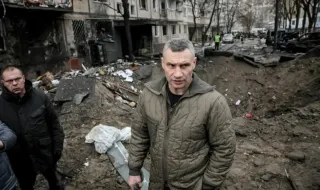
Winter in Kyiv will be difficult, and residents of the Ukrainian capital must be prepared for various scenarios, including the worst-case one. This was stated by Mayor Vitaliy Klitschko in an interview with Suspilne. According to him, the city is preparing for possible new strikes on critical infrastructure, but the outcome also depends on the effectiveness of air defense.
“I am in no way trying to sow panic. But we are adults, and we are telling the truth – different things may happen, and we must be ready for anything,” Klitschko said. The interview was conducted on November 3, against the backdrop of problems with electricity and water supplies in the city.
What is changing for heating
Kyiv is building a backup heating system. This means that, in addition to the main network, additional capacity and technical solutions are being created to maintain the service in the event of damage to key facilities.
Klitschko said that Kyiv’s district heating system is the largest in Europe and serves a city of more than 3 million residents. Its scale makes it difficult to replace with generators. If key components are destroyed, the consequences could affect a large part of the capital.
According to the mayor, the plans for the backup system, presented to the National Security and Defense Council of Ukraine, must be implemented by the end of 2026. He also said that, in the absence of an emergency, heating should reach all buildings within a week to 10 days after the system is switched on.
Generators will not replace the power grid
The city has provided generators for hospitals, schools, key social facilities, water supply and sewage systems. Backup capacity has been built at water wells, which can supply water in the event of a power outage. Supplies of drinking water, food and medicines have also been prepared.
However, this does not mean that all of Kyiv can be powered by generators. The capital needs around 2 gigawatts of electricity, while the backup generators are intended mainly for the most important services. Klitschko stressed that generators cannot provide power for the entire electric transport system, including the metro, trams and trolleybuses.
For readers, this means that in the event of severe damage, individual neighborhoods may be left without electricity, water or heating, while hospitals and other key facilities continue to operate on backup power.
Strikes on infrastructure remain the main risk
On October 30, Russian unmanned aerial vehicles struck the same critical infrastructure facility three times. Following the attack, some Kyiv residents were left without electricity and water. According to Klitschko, even protected facilities can be damaged by a direct hit.
The mayor said that the city authorities are doing what is necessary, but the normal functioning of services depends to a great extent on air defense and the protection of energy facilities. That is why citizens are being urged to have their own plan in the event of a prolonged interruption of electricity, water or heating, although this does not mean that the worst-case scenario will necessarily occur.
Sources: suspilne.media