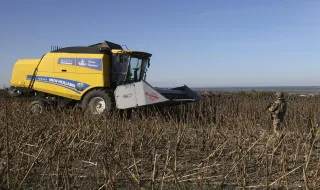
Russian military actions and occupation are causing severe damage to dozens of Ukrainian protected areas, Ukraine’s Main Directorate of Intelligence at the Ministry of Defence reports. The affected sites include “Askania-Nova,” “Meotida,” the Azov National Natural Park, the Kinburn Spit, the “Holy Mountains” and the Kreminna Forests.
According to the HUR, Russia is creating so-called nature protection institutions in the occupied parts of Donetsk, Luhansk and Kherson regions. Intelligence officials describe these structures as tools for strengthening the occupation’s control over Ukraine’s protected lands and natural resources.
“The Russian occupying army continues to destroy Ukrainian ecosystems and protected areas, turning them into sites of combat operations, military fortifications and catastrophic pollution,” the HUR said.Training Grounds and Destroyed Habitats
The war is leading to soil destruction, fires, fuel pollution and damage to natural habitats caused by mines, trenches and the movement of heavy equipment. Military vehicles compact the soil, damage plant root systems and disrupt natural water drainage.
Fuels, lubricants and remnants of munitions create chemical risks for soil and water. Fires destroy vegetation, animal breeding grounds and the food base of species.
A mortar-firing range has been built on the territory of the Azov National Natural Park. In the “Meotida” National Park, military fortifications have destroyed bird-nesting sites.
Damage in Kherson Region Exceeds UAH 1.2 Trillion
According to data from the State Environmental Inspectorate of the Southern District, damage to protected sites in Kherson region as of October 2026 is estimated at more than UAH 1.2 trillion, or approximately 28 billion dollars.
The HUR notes that international humanitarian law obliges parties to a war to protect nature from widespread, long-term and severe damage. The statement recalls that Articles 35 and 55 of Additional Protocol I to the Geneva Conventions contain such restrictions, while the Rome Statute defines as a war crime an intentional attack that causes such consequences.
“The occupation does not release Russia from its obligations under international law,” the Ukrainian intelligence service said. It warned that the creation of institutions subordinate to Moscow does not eliminate the damage already caused and does not guarantee the protection of natural ecosystems.
The full scale of the damage will be possible to establish after de-occupation and the restoration of access to the affected areas, when the necessary environmental assessments can be carried out. According to the HUR, restoring the ecosystems may take decades, and some of the damage may prove irreversible.
Sources: ukrinform.ua