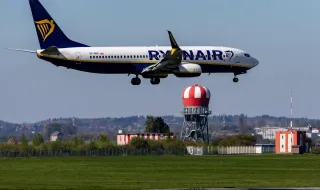
Eleven flights to and from Sofia and Prague received bomb threat alerts. Two of the affected aircraft were flying to Sofia from London Stansted and Brussels and landed safely, Bulgaria’s Ministry of Transport reported.
In Prague, the warnings affected flights from Denmark, the United Kingdom and two flights from Spain. Alerts were also received concerning aircraft heading to the Netherlands, Cyprus, Romania, Italy and the United Kingdom.
“Bomb threats affected flights from Denmark, the United Kingdom, as well as two flights from Spain. Flights to the Netherlands, Cyprus, Romania, Italy and the United Kingdom also received threats,” a spokesperson for Prague Airport said. According to him, the airport continues to operate normally and without disruption.
Three aircraft escorted over Hungary
Hungarian fighter jets escorted three passenger aircraft over the country’s airspace, Defence Minister Romulusz Ruszin-Szendi said.
One of them was an Airbus A321 operating a flight from Brussels to Sofia. The other two aircraft were flying from Prague to Cyprus and Bucharest.
Meanwhile, four new warnings were received from aircraft flying over France. They landed without incident, while bomb disposal teams carried out the necessary security checks.
A Ryanair flight from Lisbon to Rome also received a bomb threat. Portuguese authorities later determined that the threat was false.
Threats also target Irish media outlets
The series of warnings is not limited to aviation. The offices of at least two Irish media outlets, including Ireland’s national radio and television broadcaster, were evacuated after threatening emails were received.
“We still do not know whether a single individual is behind this operation or whether it is a coordinated action,” Irish Deputy Prime Minister Simon Harris said. He described the situation as very serious and stressed that it was constantly changing.
On the previous day, at least 20 flights received messages warning of a bomb on board, although no explosive device was found on any of them. NATO is monitoring developments and maintaining coordination with allied countries.
Jean-Marc Rickli, an expert on global and emerging risks, said that regardless of who was behind the threats, they should be viewed in the context of hybrid operations against European countries. According to him, sending such warnings does not require significant resources from the perpetrators, but it can disrupt transport logistics and heighten the sense of insecurity.
Responsibility for the threats targeting the airports in Rome and Sofia the previous day was claimed by individuals presenting themselves as “fighters of the “Men’s State”. However, the connection to a Russian ultranationalist movement with the same name has not been confirmed. For now, there is no information about who organised the series of alerts or whether all the incidents are connected.
Sources: bta.bg