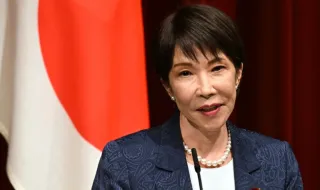
Japan had considered expelling China’s consul general in Osaka over threatening remarks against Prime Minister Sanae Takaichi, but abandoned the plan after Beijing warned of double retaliatory measures. This was revealed by the Japanese newspaper “Yomiuri Shimbun” in a report published on November 8, focusing on the continuing deterioration of relations between the two countries.
The diplomatic conflict began in November 2025, after Takaichi told the Japanese parliament that a possible Chinese military attack on Taiwan could pose an existential threat to Japan and create grounds for exercising the right to collective self-defence.
The statement triggered a sharp reaction in Beijing. China’s consul general in Osaka, Xue Jian, posted a threatening message on social media saying that the “dirty head” should be severed. His words were viewed in Japan as an unacceptable threat against the prime minister.
About a week after the parliamentary statement, Takaichi summoned Chief Cabinet Secretary Minoru Kihara and senior officials from the Foreign Ministry. During the meeting, she ordered that China be warned that if the diplomat was not recalled promptly, Japan would declare him persona non grata and expel him.
Such a measure is permissible under international diplomatic law, but is considered an extreme step that could provoke retaliatory action.
The Japanese government initially expected Beijing to respond by expelling one Japanese consul general, after which the two countries would be able to consider the matter closed.
During a visit to Beijing, however, Masaaki Kanai, director of the Asia and Oceania Affairs Bureau at Japan’s Foreign Ministry, received a categorical warning from his Chinese counterpart, Liu Jinsong.
“If you expel one, we will expel two,” the Chinese diplomat said, naming specific Japanese consuls general in China.
After being informed of Beijing’s position, Sanae Takaichi decided not to proceed with the expulsion. According to a Japanese government source quoted by “Yomiuri Shimbun”, the decision was made at the last possible moment in order to preserve room for diplomatic dialogue and prevent further escalation.
At the heart of the conflict is the Taiwan issue. Since diplomatic relations between Japan and China were restored in 1972, Japanese governments have traditionally avoided definitive statements on possible military intervention in the event of a conflict around the island.
Takaichi, however, stated that if China used military force against US armed forces operating in the Taiwan area, the situation could be defined as an existential threat to Japan. Such a classification would allow the country to exercise its right to collective self-defence under the conditions stipulated by law.
Beijing interpreted the statement as a signal of possible Japanese military intervention in the Taiwan issue and demanded that the prime minister retract her words.
A year later, the Japanese government continues to refuse to make such a concession, despite Takaichi’s desire to improve bilateral relations.
According to “Yomiuri Shimbun”, the high level of public support for the Japanese prime minister and approval of her tough stance towards China further limit the possibilities for compromise. In a survey conducted by the newspaper at the end of November 2025, nearly 60% of respondents supported her position.
For its part, China continues to demand the withdrawal of the statement regarding Taiwan, while Tokyo is unwilling to demonstrate flexibility in the face of intensifying anti-Japanese rhetoric.
Thus, the diplomatic confrontation between the two leading Asian economies is gradually becoming a lasting feature of their relations, with no prospect at present of a swift resolution of their differences.