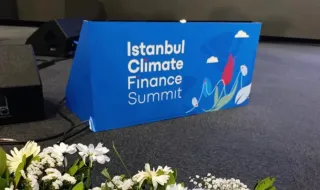
World leaders and negotiators are gathering in Antalya for COP31 – the 31st Conference of the Parties to the United Nations Framework Convention on Climate Change. The forum begins on November 9 and will continue until November 20, with the main question facing participants being how to turn commitments already made into concrete and measurable action.
Turkey is hosting the conference, while Australia is taking over the leadership of the official negotiations. Murat Kurum has been nominated as president of COP31, while Australian Climate Change Minister Chris Bowen will lead the negotiating process. The meeting of heads of state and government is scheduled for November 11 and 12.
Why COP31 matters
The conference is the main international forum where almost all countries negotiate common rules and goals to limit global warming. Following the 2015 Paris Agreement, the focus has gradually shifted from formulating long-term goals to implementing them – cutting emissions, accelerating the transition to clean energy, adapting to changes that are already under way, and providing funding for poorer and vulnerable countries.
Implementation will be the leading topic in Antalya. The COP31 presidency says it wants the negotiations to produce practical results, rather than just new political declarations. The energy transition, the resilience of cities, food security, climate finance and the protection of communities affected by extreme events are expected to be discussed.
The conference begins amid new temperature records
Data from the Copernicus Climate Change Service show that October 2026 was the warmest October globally. The average global temperature was 1.75 degrees Celsius above the pre-industrial level, and the month was the third consecutive one with an increase of more than 1.5 degrees.
According to Copernicus’ statistical model, 2026 will almost certainly be the second calendar year after 2024 to exceed the 1.5-degree threshold. This threshold is set in the Paris Agreement as a long-term goal for limiting warming, but monthly and annual deviations are not equivalent to definitively abandoning that goal. They show how quickly the time for action is narrowing.
“This is a moment of truth,” UN Secretary-General António Guterres said ahead of the meeting. He called on world leaders to do more and to do it immediately. Pressure on participants has also been intensified by the effects of heatwaves, droughts, floods and other extreme events affecting different regions.
What comes next
Following the leaders’ meeting, negotiations will continue at ministerial and expert level. Delegates are expected to work on decisions concerning the implementation of existing climate commitments and financial support for countries that have contributed the least to global emissions but are suffering severe consequences.
Final decisions must be completed by November 20. The value of COP31 will depend not only on the texts adopted, but also on whether they lead to faster emissions reductions and real protection for people and economies exposed to climate risks.
Sources: apnews.com