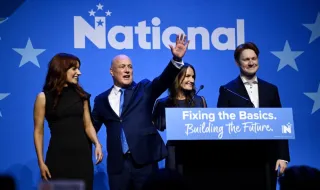
New Zealand was left without a clear winner after the parliamentary election on November 7, and the final composition of the future government will become known after the special votes are counted. Preliminary results give the governing National Party 42 seats, while Chris Hipkins’ Labour Party has 36.
The National Party, ACT and New Zealand First have a preliminary total of 67 seats in the 131-member Parliament, with 66 needed for a majority. This leaves the centre-right coalition with a narrow lead, but does not guarantee that it will retain control after the official count.
The National Party received 29.21% of the party vote, while the Labour Party won 29.36%. The percentage difference favours Labour, but the National Party won more electorate seats and therefore secured a larger number of seats overall.
Special votes could change the balance
Nearly 400,000 special ballots are yet to be counted, including votes cast by New Zealanders living abroad. The process is expected to take around three weeks, and the final results are due to be announced on November 27.
Special votes traditionally provide stronger support for left-wing parties. If some seats are redistributed, the preliminary majority of the National Party, ACT and New Zealand First could disappear. If a government cannot be formed, the country could face another election.
Christopher Luxon did not declare victory, but said that his party had a possible path to a second term. He will lead a caretaker government until the political outcome is clarified.
“I think everyone is already tired of politics, so let’s take a break for the next three weeks,” Luxon told reporters.The new party that could decide the outcome
The vote strengthened the position of the smaller parties. ACT won 13 seats, New Zealand First 12, the Greens 16, and Te Pāti Māori five. The new Opportunity party entered Parliament for the first time with seven seats and could become a key factor in the negotiations.
Opportunity is led by 38-year-old Quilae Wong, a business consultant and political newcomer who took over the party less than a year ago. She said the party could work with both the left and the right. The party presents itself as centrist and calls for evidence-based decisions, as well as an end to political conflicts.
The result is a blow to both major parties. The National Party lost support compared with the previous election, while the Labour Party failed to capitalise on discontent over economic difficulties and the high cost of living. Talks on forming a government will take on real significance after the final distribution of seats is published.