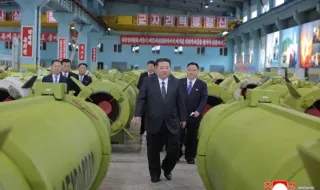
North Korea has tested a new high-speed torpedo system in the East Sea and plans to begin equipping its navy with it at the beginning of 2027. The test was reported by the Korean Central News Agency, cited by the South Korean Yonhap news agency.
The test was conducted on November 9. The Academy of Defence Sciences, the Missile Administration and the Torpedo Weapons Research Bureau took part in it. According to KCNA, they verified the “combat effectiveness” of the new system.
The North Korean agency presented the test as part of the “mandatory activities” of defence research institutions aimed at developing weapons technology. No data was disclosed about the torpedo’s speed, range, guidance system or the platform from which it was launched. KCNA also did not publish photos from the test.
Second test in less than a month
The new test comes after another underwater trial reported by Pyongyang in October. At the time, North Korea presented a high-speed precision-guided torpedo and said it used artificial intelligence technologies to detect and guide itself towards targets.
During the previous test, North Korean authorities claimed they had confirmed the operation of the propulsion system and key technologies for increasing thrust efficiency. According to the Associated Press, the development had been refined through more than 180 tests over five years.
The announcement about the new torpedo is part of a series of tests through which Pyongyang is developing its naval capabilities. In recent months, the country has also tested other systems designed for operations from the sea, including cruise missiles launched from an underwater platform.
Planned deployment in 2027
According to KCNA, the torpedo system is to be incorporated into the navy’s arsenal at the beginning of 2027. The South Korean military continues to monitor developments in North Korea’s weapons programmes, the Korean Broadcasting System reported.
Pyongyang has not specified whether the new weapon is intended for submarines, surface ships or other maritime platforms. The lack of technical data makes it impossible to independently assess its actual range and effectiveness.
Sources: en.yna.co.kr, rki.kbs.co.kr, apnews.com