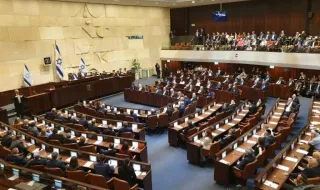
The new Israeli parliament began its work following the October 27 elections, which deprived Prime Minister Benjamin Netanyahu’s bloc of a parliamentary majority. At the first session of the 26th Knesset, lawmakers were sworn in, while talks on forming the next government continued in parallel.
Netanyahu’s Likud won 27 seats and remained the largest party, but his entire bloc has 53 lawmakers in the 120-seat parliament. In the previous election, the same bloc held 68 seats. A coalition needs the support of at least 61 lawmakers to receive a vote of confidence.
The bloc around opposition leader Gadi Eisenkot won 48 seats, while the Arab parties secured a total of 19 parliamentary mandates. This means they could prove decisive in forming a new majority. Voter turnout reached 77.9%, and a total of 5,716,665 votes were reported to have been cast.
Eisenkot Receives the First Mandate
President Isaac Herzog tasked Eisenkot with forming a government after 67 lawmakers recommended him for prime minister during the consultations, while 46 backed Netanyahu. The leader of „Yashar“ has 28 days, and may receive an additional 14 days if necessary.
Eisenkot said he aims to build a „national emergency government“, but to do so he will have to attract support from outside his bloc. The possibilities include an agreement with the Arab parties or with the ultra-Orthodox formations, with both options potentially causing disagreements among his allies.
„The election is over. Now it is time to accept reality“, Herzog said after accepting the official results. The Electoral Commission said it had found no violations that affected the integrity of the vote or changed the final result.
First Clash over the Parliamentary Speaker
On the very day lawmakers were sworn in, Eisenkot’s bloc took steps to replace Knesset Speaker Amir Ohana of „Likud“. The „Yashar“ party submitted a petition to nominate Matan Kahana for the post, showing that the opposition majority intends to use its parliamentary weight even before a cabinet has been formed.
The ultra-Orthodox „United Torah Judaism“ said it had no prior commitment to any political bloc and set conditions for possible participation in a future government. Meanwhile, „Shas“ reaffirmed its support for Netanyahu and tied it to legislation concerning students in religious schools.
If Eisenkot fails to secure the necessary support, the mandate may be returned and a new stage of political negotiations may begin. If all options fail, Israel could face new parliamentary elections at the beginning of 2027.
Sources: jpost.com, timesofisrael.com, apnews.com