Russia is waging hybrid warfare in Romania and across Europe, Romanian President Nicușor Dan said after his meeting with European Commission President Ursula von der Leyen in Bucharest. He cited drone incursions, sabotage, cyberattacks and disinformation campaigns as part of this strategy.
“All of these constitute a whole spectrum of hybrid warfare, in which Russia is clearly trying to escalate the conflict that began in Ukraine and draw European countries into it,” Dan said at the joint press conference.
The Black Sea is at the center of security
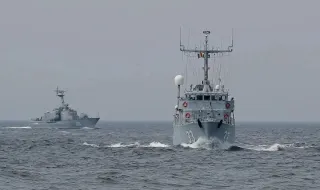
According to the Romanian president, the recent incidents in the Black Sea should not be viewed in isolation. He described the region as important for global trade, energy security and the protection of Europe.
“We cannot speak either of a stable peace in Ukraine or of an effective way to rebuild it without a secure Black Sea,” Dan said. On November 4, he had already pointed out that Romania was facing the entire spectrum of hybrid threats—from cyberattacks and sabotage to aerial and maritime drones, provocations and intensive disinformation campaigns.
In response to the risks, the European Commission announced €50 million for the creation of a maritime security center, which will be managed by Romania and Bulgaria. An additional €10 million is intended for the Romanian authorities and search-and-rescue operations in the Black Sea. Ursula von der Leyen said that Romania was “on the front line of European security.”
Bucharest links sabotage incidents to a broader campaign
Dan’s statement comes amid an investigation into a fire on September 14 at an industrial site in Brașov County, near a facility belonging to state-owned arms manufacturer Romarm. According to Romanian authorities, three foreign nationals—two Belarusians and a Ukrainian living in European Union countries—were linked to an alleged sabotage network coordinated by Russia.
Two of the suspects were detained in Germany, while a European arrest warrant was issued for a third, who is in Poland. The Romanian side said that the network had also been assigned tasks outside the country, including against sites of military and industrial significance.
Russia rejected the allegations. The Russian Embassy in Bucharest described them as unfounded and said that no evidence indicating Moscow’s involvement had been presented to the ambassador.
Nicușor Dan said that Romania would strengthen coordination with NATO and the European Union. The next steps involve specifying the schedule and structure of the Black Sea security center, as well as preparing the Romanian and Bulgarian contributions to it.
Sources: agerpres.ro, stirileprotv.ro, apnews.com