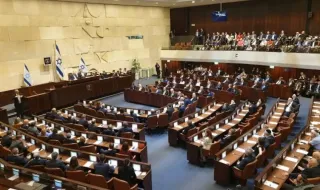
The first session of the new Knesset was marked by a scandal over the possible participation of Arab parties in Israel’s future government. The повод was the political deadlock following the October 27 election, in which the two main Arab factions won a total of 19 of the 120 seats.
Gadi Eisenkot’s bloc has 48 lawmakers, while the factions around Benjamin Netanyahu have 53. Neither camp has the required majority, making the Arab parties a decisive factor in the negotiations.
Confrontation during the swearing-in ceremony
During the ceremony, Itamar Ben-Gvir, leader of the far-right Jewish Power party, interrupted Yousef Jabareen, chairman of the largest Arab faction, the Joint List. “Before whom is he taking the oath—in front of Hamas?” Ben-Gvir shouted, according to Agence France-Presse.
He later wrote that anyone who is not loyal to Israel should not be a member of the Knesset. Some lawmakers from the Joint List left the chamber during the Israeli national anthem, triggering fresh tensions.
In his speech, Netanyahu said that the two main Arab parties do not recognize Israel as a Jewish state. He accused the factions of seeking an “Islamic state” or a “Palestinian nationalist state on the ruins of the Jewish state.” The Associated Press notes that this claim is not supported by evidence, while Ra’am leader Mansour Abbas has acknowledged Israel’s Jewish character in the past.
Democratic Party leader Yair Golan left the chamber during Netanyahu’s speech. He later said that the prime minister was trying to cling to power through “lies and incitement” against the Arab population.
Eisenkot seeks a majority
President Isaac Herzog tasked Eisenkot with forming a government. He has up to 42 days to negotiate a majority. If he fails, the mandate may be given to another lawmaker, including Netanyahu, or new elections may be called.
Yousef Jabareen said that the Joint List was ready to support an Eisenkot government from outside, but would not join the coalition. “This is a historic moment, and I hope there will be partners in the opposition who will move forward,” he told the British newspaper The Guardian.
However, his position is facing opposition within the opposition camp itself. Yisrael Beiteinu leader Avigdor Lieberman said he would not support a minority government dependent on Arab lawmakers. The left wing around Golan is open to such an arrangement, while Lieberman categorically rejects it.
The first test for the new parliamentary majority will be the election of the Knesset speaker. Lawmakers from the Arab factions have backed Matan Kahana, the candidate of Eisenkot’s party. The vote is expected on November 17, and the new speaker could accelerate legislative initiatives targeting Netanyahu’s policies, including the establishment of a commission to investigate the failures surrounding the October 7, 2023 attack.
Sources: apnews.com, 24newshd.tv, timesofisrael.com