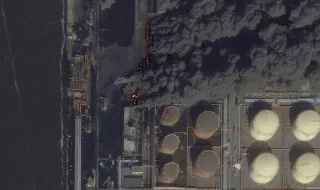
An attack by unmanned aerial vehicles struck the port area of Ust-Luga in the Leningrad Region, Russian authorities reported. A fire broke out after the strike, and three port workers were injured. The information was provided by the region’s governor, Alexander Drozdenko.
He said that a transformer substation in Ust-Luga had ceased operations. At this stage, it has not been specified which terminal or facility was damaged, nor the extent of the material damage. There are no confirmed reports of fatalities.
“Combat operations are continuing,” Drozdenko wrote at the height of the attack. Later, he reported that around 150 drones had been shot down over the Leningrad Region. In an earlier statement, the governor had spoken of 146 destroyed drones. The discrepancy is due to the different interim assessments published during the attack.
Pulkovo Airport in St. Petersburg resumed operations after nearly seven hours of restrictions. No data has been published indicating a complete halt to shipping or cargo operations in Ust-Luga.
Why the Port Is Important
Ust-Luga is one of Russia’s key export hubs on the Baltic Sea. Oil, petroleum products, grain and other cargo are transported through it. According to data cited by Reuters, the complex has a capacity of around 30 million tonnes per year, including approximately 19 million tonnes of heavy petroleum products.
The port is part of the export infrastructure linking Russian refineries and storage facilities with international markets. Therefore, a fire or damage to a terminal could lead to a temporary restriction of loading operations, the diversion of cargo to other ports and delivery delays. Whether this will happen after the latest attack will depend on which facility was affected and how quickly repairs are carried out.
Another Attack in 2026
Ust-Luga had already been attacked several times in 2026. Fires and infrastructure damage were reported during the attacks in March, while the loading of oil and petroleum products was temporarily suspended. Fires and damage in the port area were also recorded during subsequent attacks in August and September.
The new strike shows that Russia’s Baltic export infrastructure remains a priority target in the ongoing war. For now, however, there is not enough publicly available data to determine whether the consequences are limited to a single facility or affect the operation of the port complex more broadly.
Sources: in.marketscreener.com, kommersant.ru, fontanka.ru