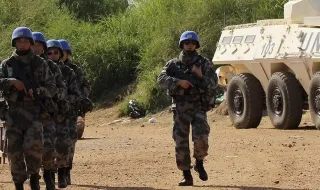
The UN peacekeeping mission in South Sudan and local authorities knew that an attack was being prepared in Abyei, but failed to take sufficient preventive action. Amnesty International makes this claim in a report on the massacre in the town, carried out on March 1, 2026.
According to the organization, between 1,000 and 1,500 armed men from the neighboring Mayom County attacked Abyei for around four hours. The attackers shot at residents, set homes on fire, looted part of the hospital and destroyed facilities in the market.
The authorities reported at least 213 deaths – 130 town residents, 76 members of the security forces and seven foreign nationals. The report says that at least 109 people were wounded, while most of the bodies were buried in two mass graves. Satellite images show that more than 230 buildings were destroyed by fire.
The warnings were known in advance
Amnesty International claims that the authorities in South Sudan and UNMISS had information about a likely attack at least two weeks before it took place. Tensions had already escalated in mid-February, and on February 28 around 1,000 civilians sought protection outside the temporary UNMISS base on the outskirts of Abyei.
Seven of the killings documented by the organization took place outside the rear gates of the base. Residents had been trying to reach it, hoping that the peacekeepers would protect them.
“Both the government and UNMISS had sufficient information and time to take more effective preventive action. Their failure cost human lives,” said Tigere Chagutah, Amnesty International's regional director for East and Southern Africa. The organization conducted 82 interviews with witnesses, survivors, medical workers, local leaders and other sources.
UNMISS: Resources were limited
UNMISS representative Priyanka Chowdhury said that the mission had operated with limited resources and had directed its available capacity toward providing protection and medical assistance to around 2,500 people who had taken shelter in a protected area.
According to her, the mission had “concentrated its available capacity on the immediate protection of civilians who had sought refuge at the base, rather than distributing its limited forces among tasks that it could not safely carry out simultaneously”. UNMISS requested that the national army send additional forces and deployed a further 40 police officers after the attack.
Amnesty International raises the question of why the reinforcements were sent after the massacre rather than before it, particularly following a similarly deadly attack in the area in April 2025. The mission did not provide a specific answer to this question.
Call for an independent investigation
Amnesty International is calling on the authorities in South Sudan to conduct an independent, impartial and public investigation into the killings and to hold the suspected perpetrators criminally accountable. The organization is also calling for a parliamentary inquiry, as well as compensation and support for survivors and the families of those killed.
Separately, Amnesty is calling on UNMISS to carry out an independent review of its response before, during and after the attack and to publish the findings. The authorities in South Sudan have not responded to letters requesting information about the findings, the organization said.
The attack took place amid renewed violence between government forces and opposition groups, undermining the 2018 peace agreement. In April, the UN Security Council extended UNMISS's mandate but reduced the mission's authorized strength from 17,000 to 12,000 troops.
Sources: apnews.com, washingtonpost.com