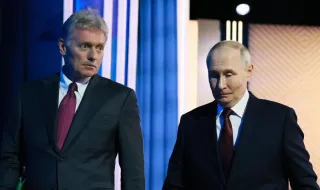
Russia insists that NATO’s policy of non-expansion to the east be officially enshrined in a document. This was stated by Russian President Dmitry Peskov’s press secretary in a comment for Channel One.
According to him, Moscow has already received assurances that the military alliance would not move eastward. Peskov linked these assurances to the periods when Soviet leader Mikhail Gorbachev and Russia’s first president, Boris Yeltsin, were in power.
“Since the era of Gorbachev and Yeltsin, NATO has expanded eastward five or six times. Therefore, it is logical that such significant commitments, at least from our point of view, should be backed by concrete actions – by officially and documentarily enshrining the policy of NATO non-expansion,” Peskov said.The Dispute over the Assurances Given
Moscow has claimed for years that Western countries made commitments to the Soviet leadership at the end of the Cold War. At the center of the dispute are the talks held in 1990 concerning German reunification and NATO’s future military presence in the former East Germany.
Declassified documents show that Western representatives used wording related to not moving the alliance’s military infrastructure eastward. Moscow, however, interprets these talks as a broader political promise that also included the countries of Central and Eastern Europe.
The Treaty on the Final Settlement with Respect to Germany, signed on September 12, 1990, included restrictions on the deployment of foreign troops and nuclear weapons on the territory of the former East Germany. The document contained no general ban on NATO’s future expansion to other countries.
The Kremlin’s Demand and the Security Talks
In 1997, Russia and NATO signed the Founding Act on Mutual Relations, Cooperation and Security. It created a framework for political dialogue but did not grant Moscow veto power over decisions on membership in the alliance.
Peskov is raising the issue of a formal agreement amid new international discussions on European security. The Associated Press reported that Russia considers NATO’s expansion a major threat and insists that the issue be included in talks on the future security order in Europe.
Such a written agreement would affect the right of states to independently choose their military and political alliances – a principle defended by NATO and a number of European countries. So far, there have been no reports that the alliance has accepted Russia’s demand.
Sources: kommersant.ru, apnews.com