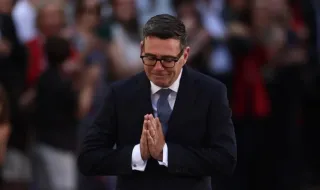
British Prime Minister Andy Burnham said that the United Kingdom and the European Union could reach a mutually beneficial agreement that would bring their relationship closer to what people who voted for Brexit in 2016 had envisioned. He made the statement in Dublin during the meeting of the European Political Community, days before the planned EU–UK summit in Brussels.
„I believe there is a good deal that can benefit both Britain and Europe. The deal has not yet been concluded, and there will be long nights over the next seven days,“ Burnham said.According to the prime minister, Britain ended up with a „much harder Brexit“ than the one people thought they were supporting when they went to the polls. He described the aim of the current course as a return to closer working relations with Europe, without announcing a specific final agreement.
Deals on food, emissions and youth mobility
The summit between London and the EU is scheduled for November 20, 2026, in Brussels. It is expected to discuss arrangements for trade in food and beverages, cooperation in the emissions trading system, and a scheme to make it easier for young people from the UK and the EU to work, live and study on both sides of the Channel.
However, tuition fees for European students in the UK remain an obstacle. The European Union has made it clear that some of the arrangements could depend on a decision for European students to pay domestic rather than international fees.
Burnham claims that the planned deal on food and beverages will reduce administrative obstacles after Brexit and could add 0.4 percent to the UK's gross domestic product. He said closer cooperation with the EU could ease pressure on household prices and make it easier for farmers and food producers to operate.
Deeper relations after the summit
The prime minister has already allowed for different options for future relations to be discussed, including joining the single market, the customs union or even Britain rejoining the EU. He said that the decision on any potentially greater change would be taken after negotiations and that there would be no significant reconsideration of the relationship before the next parliamentary election.
At the end of October, Burnham called for an „honest conversation“ about free movement between Britain and the EU. At the time, he noted that the migration balance had changed over the past decade, but acknowledged that a return to free movement would create „very serious challenges“.
European Commission President Ursula von der Leyen spoke with Burnham in Dublin, while the EU's High Representative for Foreign Affairs, Kaja Kallas, said she would like Britain to once again be part of Europe. Kallas warned, however, that the negotiations would not be easy because of the tensions that have built up around Brexit.
Burnham meanwhile rejected former Prime Minister David Cameron's claim that Britain's weak economic growth had nothing to do with Brexit. According to the British prime minister, the data show the opposite. The final parameters of the new arrangements will depend on the negotiations ahead of the meeting in Brussels.
Sources: theguardian.com, the-independent.com