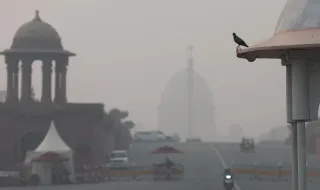
Delhi overtook Lahore to become the most polluted major city in the world after air quality in the Indian capital reached dangerous levels. The air quality index stood at 334, according to Swiss platform IQAir, which monitors the concentration of toxic substances.
India’s Central Pollution Control Board recorded an even higher value of 403 and classified the conditions as severe. The difference is explained by the different scales and methodologies used by IQAir and the Indian authorities. By comparison, an index of up to 50 is considered good.
Dense smog has blanketed the city, which has a population of around 20 million. Cars and motorcycles were moving in severely reduced visibility, while street lighting along the main roads was partially obscured by fog and pollution.
Seasonal Smog and Accumulated Pollution
In northern India and neighboring Pakistan, pollution usually worsens during the colder months. Cold, heavy air traps emissions from traffic, construction dust and smoke from the burning of agricultural residue close to the ground.
An analysis by the Centre for Science and Environment shows that the problem in Delhi began before pollution peaked around the Hindu festival of Diwali. The average concentration of fine PM2.5 particles during the week before the festival reached 236 micrograms per cubic meter - 97 percent higher than the 120 micrograms recorded in 2025.
According to the analysis, during the period from November 1 to 8, the regional transport of pollution accounted for 54.43 percent of PM2.5 in Delhi. Local sources contributed 33.06 percent, while the burning of crop residue accounted for 14.29 percent. Among local factors, transport was identified as the leading source.
Restrictions in Force for Delhi and the Surrounding Region
The Commission for Air Quality Management introduced the third stage of the GRAP plan in Delhi and the National Capital Region on November 6. The measures include restrictions on some dust-generating construction activities, while schools up to fifth grade must conduct classes in a hybrid format.
“Short-term emergency measures cannot replace systemic solutions,” said Anumita Roychowdhury, executive director of Research and Advocacy at the Centre for Science and Environment. According to her, seasonal peaks caused by fireworks and agricultural fires aggravate the crisis, but high baseline pollution is maintained by transport, industry, construction and other sources throughout the year.
Sources: reuters.com, apnews.com, ndtv.com