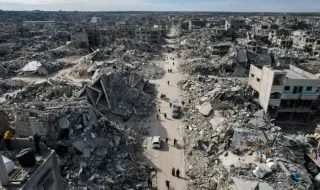
Israeli policies and restrictions on humanitarian deliveries have intensified the deadly consequences of the winter storm in Gaza, the UN Humanitarian Team for the occupied Palestinian territory said. According to the team, children and adults have died, vital services have been disrupted, and thousands of tents have been flooded, swept away or torn apart by heavy rains and strong winds.
“Children and adults were killed, vital services were disrupted, and thousands of family shelters were flooded, swept away or destroyed – not only by the storm, but also by policy decisions,” the humanitarian team said in a statement.
Tens of thousands of households affected
Heavy rains began on the evening of November 6 and caused flooding across Gaza's five governorates in the following days. According to the UN Office for the Coordination of Humanitarian Affairs, around 46,000 households were affected and more than 40,000 family shelters were damaged.
By November 7, more than 6,000 completely destroyed shelters and another 17,400 damaged ones had been recorded. Around 600 households were forced to relocate again. In some areas, the water reached a depth of 1.5 meters. Five displaced Palestinians, including three children and two women, were killed when a sand embankment collapsed onto tents near the Al Berka reservoir.
Around 65 percent of Gaza's population – approximately 1.4 million people – live in tents or temporary shelters. Flooding has also affected medical facilities, learning spaces, sanitation systems and roads. The mixing of rainwater with wastewater increases the risk of disease, while shortages of pumps, fuel, motor oil and spare parts are making drainage more difficult.
More than 150,000 tents waiting outside Gaza
The UN says that more than 150,000 tents purchased by humanitarian organizations and countries are located outside Gaza and ready to be shipped. More tarpaulins, blankets, heating materials, drainage pumps and heavy equipment are also needed.
The humanitarian team says deliveries are being delayed by multiple approval procedures, limited capacity at crossing points and unpredictable periods for aid to enter. According to the UN, restrictions on access to large parts of Gaza leave displaced people with fewer opportunities to move voluntarily to areas less at risk of flooding.
UN Humanitarian Coordinator Tom Fletcher called for the immediate opening of all crossing points. “No more delays,” he said, warning that the blocking of aid and funding cuts were already leading to the loss of human lives.
Israel rejects the accusations
Israeli Prime Minister Benjamin Netanyahu rejected claims that Israel was responsible for the worsening conditions in the tent camps. He accused “Hamas” of refusing to disarm and appropriating humanitarian aid for military purposes, without presenting evidence to support the allegation.
According to The Associated Press, the UN and humanitarian organizations say that more than 150,000 tents and drainage pumps are ready to be brought in, but their entry has not been authorized. The storms have damaged tens of thousands of temporary shelters, while winter in Gaza is only just beginning.
Sources: aljazeera.com, apnews.com