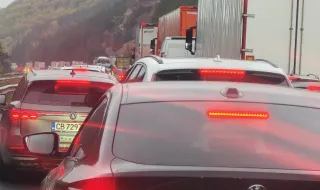
Following the serious chain-reaction crash on the Trakia Motorway, the question remains of how drivers can be warned in time when visibility drops sharply. How do some of Europe’s most innovative road warning systems work?
In France, there is one rule that is easy to remember. If you can see less than 50 metres ahead, the maximum speed is 50 kilometres per hour. This applies even on a motorway and even if there is no new sign. In the city of Clermont-Ferrand, engineers can create dense fog and torrential rain on demand.
They do this at a specially built test facility, opened two years ago and costing two million euros. There, they test what else the vehicle’s cameras and sensors can detect when visibility drops and the white line begins to disappear.
In Germany, when visibility is below 50 metres because of fog, rain or snow, the limit is also 50, and trucks weighing more than 7.5 tonnes are not allowed to overtake.
On a motorway in Spain, red lights along the road warn that there is a car ahead in the fog. On the "A8" motorway, the road itself indicates that there is a car ahead in the fog. Yellow lights outline the route. When the sensors detect a vehicle, the red lights switch on successively along its path. The driver behind can see the warning before distinguishing the brake lights. The system covers 16 kilometres of the high-speed road.