Donald Trump has told senior advisers that he may refrain from launching new strikes against Iran if Tehran or the Iran-backed Houthis in Yemen do not carry out new provocations. This was reported by “Reuters,” citing three people familiar with the discussions.
The US president considered this option during meetings with national security advisers and after a series of intelligence briefings. According to current and former administration officials, however, Trump has still not made a final decision on how to end the conflict.
He has alternated between threats of a new military escalation and public signals that large-scale hostilities may not resume. In an interview with sports journalist Stephen A. Smith, Trump said: “I can end it immediately, but at the request of the countries I am trying to protect, we are doing it in a somewhat longer and more civilized way.”
Saudi Arabia and Turkey Urge Restraint
Over the past two weeks, Trump has spoken with Saudi Crown Prince Mohammed bin Salman and Turkish President Recep Tayyip Erdoğan. According to a US official and another person familiar with the conversations, both urged him not to resume the attacks against Iran, but Trump made no commitment to do so.
On October 31, Trump told bin Salman that he planned to launch an attack after the US midterm elections. The Saudi crown prince urged him to wait, pointing out that economic sanctions against Iran were having an effect.
Meanwhile, US intelligence assesses that the naval blockade and sanctions are putting pressure on Iran’s economy. In a Reuters and “Ipsos” poll conducted shortly before the November 3 election, 55% of Americans said the war was not worth the cost. Vice President JD Vance cited the conflict as one of the reasons Republicans lost control of Congress.
The Military Option Remains on the Table
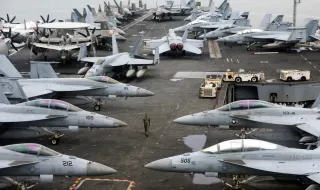
Despite the signals of restraint, the US military is preparing for a possible escalation. A third aircraft carrier is expected to head toward the Middle East in the coming days, and all three ships could remain in the region if necessary.
Options under discussion include new strikes on underground nuclear facilities in Iran. According to US officials, however, intelligence assessments indicate that such an operation may not significantly change Tehran’s position in negotiations. Trump has also received information about US weapons stocks, some of which have declined following the prolonged use of long-range precision munitions.
Israeli officials continue to press the Trump administration for a new military campaign against Iran. The White House said that the president is the only person who makes decisions on military action and that the US is in a strong position thanks to its control of the Strait of Hormuz and the mounting economic pressure on Iran.
Trump’s position also remains unclear to mediators in the region. Qatar continues its efforts to reach a temporary agreement that would restore traffic through the Strait of Hormuz and leave room for further talks between Washington and Tehran. According to the “Associated Press,” the US president’s contradictory statements have put diplomatic efforts on hold.
Sources: reuters.com, apnews.com, axios.com